
Summary:
Most people don’t think about a pawn shop’s license until something goes wrong. And by then, it’s too late to ask. If you’re in Nassau County and considering a pawn shop — whether to get a quick loan, sell gold, or buy a pre-owned watch — you deserve to know exactly who you’re dealing with before you walk through the door. This guide covers what New York State law actually requires of licensed pawnbrokers, how to spot the red flags of an unlicensed operation, and what your rights are as a consumer. It’s not complicated once you know what to look for.
Pawn Shop Regulations in New York State: What the Law Actually Requires
In New York, pawnbrokers are legally classified as “collateral loan brokers” under Article 5 of the New York State General Business Law. That classification comes with real obligations — not suggestions, not best practices, but legal requirements that every licensed shop must meet to operate.
At the state level, every collateral loan broker must also register with the New York State Comptroller under the Abandoned Property Law. That’s a second layer of accountability on top of whatever local license the municipality requires. And at the federal level, pawn shops are subject to the Truth in Lending Act, which means we must disclose the full cost of any loan — the amount, the interest rate, the fees, and the total repayment — before you sign anything.
Consumer Protection Laws That Apply to Every Nassau County Pawn Transaction
The Truth in Lending Act isn’t just a formality. It means that before any loan is finalized, you’re entitled to a written memorandum showing exactly what you’re agreeing to — the loan amount, the interest rate, the term, and what it will cost you to get your item back. A licensed pawn shop is legally required to hand you that document. If a shop is vague about the numbers, or rushes you past the paperwork, that’s a problem.
Beyond federal law, New York State and local municipalities set caps on interest rates and require pawnbrokers to hold pledged items for a defined period before they can be sold. This matters because it protects you from losing something valuable due to a short grace period or a miscommunication about the loan term. In New York City, for example, the cap sits at 4% per month — and similar consumer-first frameworks apply across Nassau and Suffolk Counties.
There’s also the U.S. Patriot Act to consider. Licensed pawn shops are required to verify your identity and maintain transaction records for every deal. This isn’t just about preventing money laundering — it’s what keeps stolen goods out of the inventory. When a shop checks your ID and documents the transaction, they’re cooperating with law enforcement in a way that protects you as a buyer, not just as a seller.
If something does go wrong with a licensed operator, you have real options. You can file a complaint with your local consumer affairs office, contact the New York State Attorney General, or make a claim against the shop’s surety bond — which brings us to what that bond actually means for you.
What a Pawnbroker Surety Bond Means for Nassau County Consumers
A surety bond isn’t just a piece of paper. It’s a financial guarantee — posted by the pawnbroker, payable to the local government — that the shop will operate within the terms of its license. If they don’t, the bond provides a mechanism for financial recourse. For consumers, this is one of the most concrete protections in the entire licensing framework, and it’s one of the clearest ways to distinguish a legitimate operator from someone running an informal or unlicensed operation.
In Nassau County, the Town of Hempstead — which covers a large portion of the county — requires all licensed pawnbrokers to carry a $10,000 surety bond payable to the Town, in addition to paying an annual license fee of $250. These requirements exist under the same NYS GBL Article 5 framework that governs pawnbrokers statewide. The bond amount may not sound enormous, but its existence is the point. It means the operator has been vetted, has skin in the game, and is accountable to a government body — not just to their own conscience.
An unlicensed operator has none of that. No bond means no financial backstop if your item is lost, damaged, or mishandled. No license means no regulatory oversight, no required disclosures, and no complaint process. If something goes wrong with an unlicensed shop, your options are limited to civil litigation against someone who may have no verifiable business address and no assets on the line. That’s a very different situation from dealing with a bonded, licensed pawnbroker who answers to the Town of Hempstead or the Town of Huntington.
Nassau County is also one of New York State’s designated IMPACT counties — a classification that reflects the county’s size and the corresponding attention law enforcement pays to businesses like pawn shops. Licensed pawnbrokers in Nassau County are required to report transactions to local law enforcement, which means the items in a licensed shop’s inventory have been documented, logged, and cleared through a process that actively deters stolen goods. That’s worth something when you’re buying a pre-owned watch or piece of jewelry.
Suffolk County Business License Requirements for Pawnbrokers
Suffolk County operates under the same NYS GBL Article 5 framework as Nassau County, but licensing is handled at the town level — meaning the specific requirements depend on which municipality the shop is physically located in. The Town of Huntington, for instance, has its own pawnbroker licensing ordinance that governs shops operating within its jurisdiction.
This hyper-local structure is important to understand, especially if you live in Nassau County and are considering a shop just across the county line. A shop licensed in one New York town is not automatically licensed in another. The license is issued by — and accountable to — the local government where the business physically operates.
How to Verify a Pawn Shop Is Properly Licensed Before You Visit
Verifying a pawn shop’s license doesn’t require a legal background. It requires asking the right questions and knowing what a legitimate answer looks like. The most direct approach is to ask the shop directly for their license number and the issuing authority — a licensed operator will tell you immediately and without hesitation. The license itself should also be displayed on the premises, typically near the entrance or behind the counter, where all customers can see it.
For Nassau County residents, the relevant licensing authority depends on which town the shop operates in. The Town of Hempstead issues pawnbroker licenses for shops within its jurisdiction; the Town of Huntington covers shops in that area of Suffolk County. You can contact either town’s licensing or business office directly to confirm whether a specific shop holds a current, valid license. This is a public record — you’re entitled to that information.
Beyond the license itself, look for the surety bond. A licensed shop should be able to confirm that they carry the required bond and name the issuing authority. If they can’t answer that question, or if the answer is vague, treat it as a red flag. Also look for visible compliance signage, written loan disclosures, and a consistent ID verification process for every transaction. These aren’t optional extras — they’re legal requirements that every licensed shop must follow.
One thing worth knowing: New York City maintains a publicly searchable database of active pawnbroker licenses through the NYC Department of Consumer and Worker Protection. Nassau County shops are licensed at the town level, so they’re not covered by that database — but the existence of NYC’s system gives you a useful reference point for what regulatory transparency looks like. If a Nassau County shop can’t tell you where their license comes from, that’s worth questioning.
Red Flags That Suggest a Pawn Shop May Not Be Operating Legally
Most people can sense when something feels off about a business. But with pawn shops, the stakes are high enough that it’s worth knowing the specific warning signs rather than relying on instinct alone — especially when you’re considering handing over a Rolex, a diamond ring, or a piece of jewelry that’s been in your family for decades.
The clearest red flag is the absence of a visible license on the premises. Licensed pawn shops in New York are required to display their license where customers can see it. If you walk in and there’s nothing posted — or if you ask and the staff can’t tell you their license number or issuing authority — that’s a serious concern. A legitimate operator doesn’t have to think about that answer.
Watch for shops that skip ID verification. Licensed pawnbrokers are legally required to verify your identity and document every transaction. A shop that buys or loans without checking ID isn’t just cutting corners — they’re violating state law and potentially handling stolen goods. That puts you at risk as a buyer and tells you something important about how the rest of their operation runs.
Be cautious of shops that are vague about loan terms, rush you through paperwork, or can’t produce a written memorandum of the loan before you sign. Under the Truth in Lending Act, that document is not optional. Pressure tactics and rushed transactions are also worth noting — a shop that doesn’t want you to read what you’re agreeing to is a shop that doesn’t want you to know what you’re agreeing to.
Finally, consider the overall business presence. A legitimate pawn shop has a fixed address, consistent hours, a verifiable business history, and reviews across multiple platforms. An operation with no online presence, no reviews, and no traceable business history is a harder entity to hold accountable if something goes wrong. In Nassau County — where the average home value exceeds $684,000 and residents often have high-value assets to sell or pawn — the cost of dealing with the wrong operator can be significant.
Why Licensed Pawn Shops in Nassau County Are Worth the Extra Five Minutes of Research
The licensing framework for pawn shops in New York isn’t bureaucratic red tape — it’s the infrastructure that makes the whole transaction safe for you. The surety bond, the required disclosures, the transaction reporting, the interest rate caps — these exist because the alternative is a market with no accountability and no recourse when something goes wrong.
If you’re in Nassau County and you’re ready to sell, pawn, or buy from a shop you can actually trust, the research you’ve done here is a good starting point. The next step is walking into a place that can answer your questions directly, show you their credentials without hesitation, and make you feel like your business — and your property — matters.
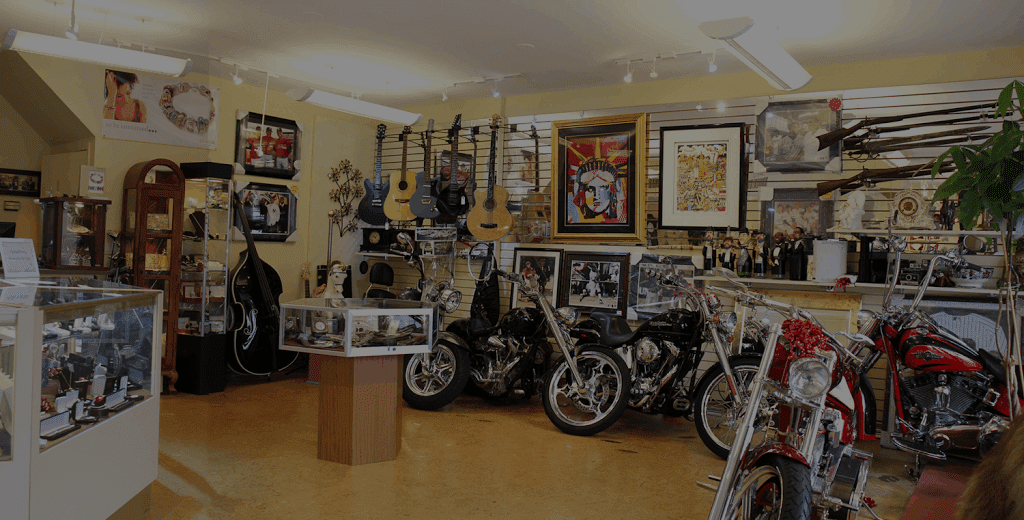
We hold all required local and state licenses, carry the mandatory surety bond, and have been serving Nassau and Suffolk County residents for years from our Huntington showroom on E Jericho Turnpike. If you have questions before you visit, we’re happy to answer them.
—
**Frequently Asked Questions**
**What specific licenses and bonds does your pawn shop maintain?** We hold all required licenses under New York State General Business Law Article 5, issued by our local municipal authority in Suffolk County, and we carry the mandatory surety bond required by our licensing jurisdiction. We’re also registered with the New York State Comptroller under the Abandoned Property Law, as required of all collateral loan brokers operating in New York. If you’d like to confirm our license details before visiting, just call us — we’ll tell you exactly what we hold and who issued it.
**How can I verify if a pawn shop is properly licensed in Nassau County?** Licensing for pawn shops in Nassau County is handled at the town level, not the county level. Contact the Town of Hempstead’s business licensing office to verify shops within that jurisdiction — they issue pawnbroker licenses and require a $10,000 surety bond in addition to an annual license fee. For shops in other Nassau County towns, reach out to that specific town’s licensing office. You can also simply ask the shop directly for their license number and issuing authority — a legitimate operator will answer that question immediately without hesitation.
**What consumer protections exist for pawn shop customers in New York?** Quite a few. Under the Truth in Lending Act, you’re entitled to a written disclosure of all loan terms before any transaction is finalized. New York State and local regulations cap the interest rates pawn shops can charge. Licensed shops are required to hold your pledged item for a defined period before it can be sold. And the mandatory surety bond gives you a financial recourse mechanism if the shop violates the terms of its license. These protections only apply when you’re dealing with a licensed operator — which is exactly why verifying the license matters.
**What happens if I deal with an unlicensed pawn broker?** You lose most of the protections described above. There’s no surety bond to make a claim against, no licensing authority to file a complaint with, and no regulatory framework requiring the operator to follow any of the rules that protect you. If your item is lost, damaged, or the loan terms turn out to be different from what you were told, your only option is civil litigation — against someone who may have no verifiable business address and no accountability to any government body. It’s a situation worth avoiding entirely, especially when the verification process takes less than five minutes.