Summary:
August arrives fast. One week you’re thinking about summer, and the next you’re staring down a list of school supplies, new clothes, a laptop your kid suddenly needs, and registration fees you forgot about. For families across Nassau County, that list tends to run long — and expensive.
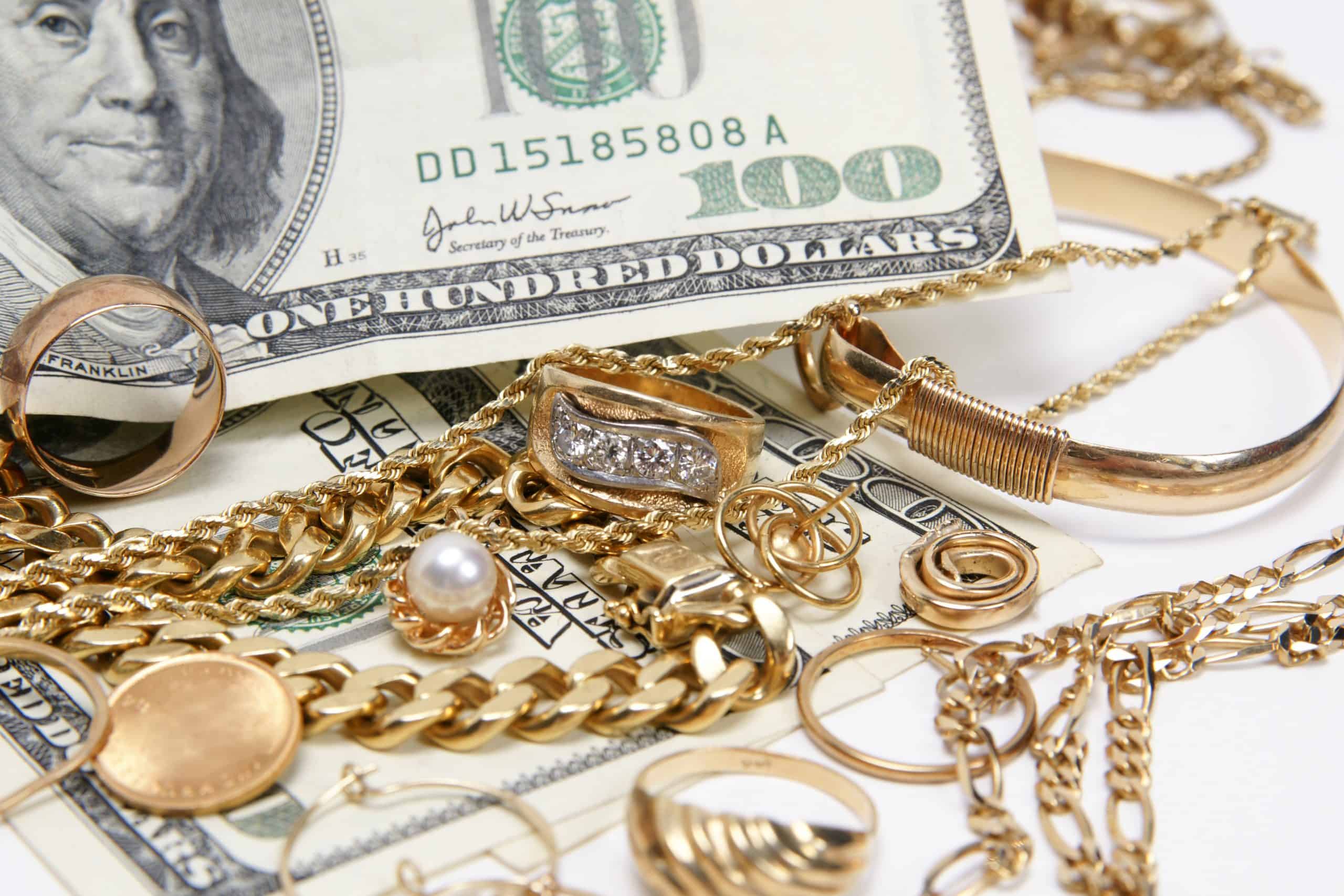
If you have jewelry sitting in a drawer that you haven’t touched in years, this is the window to do something with it. Selling jewelry for cash is one of the fastest, most straightforward ways to fund back-to-school expenses without taking on new debt or running a credit check. Here’s what you need to know before you walk in the door.
Sell Jewelry for Cash: Funding Back-to-School Expenses in Nassau County
In communities like Jericho, Syosset, and Great Neck, where school expectations and extracurricular costs run higher than the national average, families are looking at real numbers well above $858. Add a college-bound student to the picture and you’re looking at over $1,300 per household before move-in day.
Selling jewelry you no longer wear isn’t a desperate move. It’s a practical one. You’re converting a dormant asset into cash at a moment when you actually need it — and right now, with gold prices near record highs, the timing is genuinely favorable for sellers.
What Jewelry Is Actually Worth Selling — and What Affects the Offer
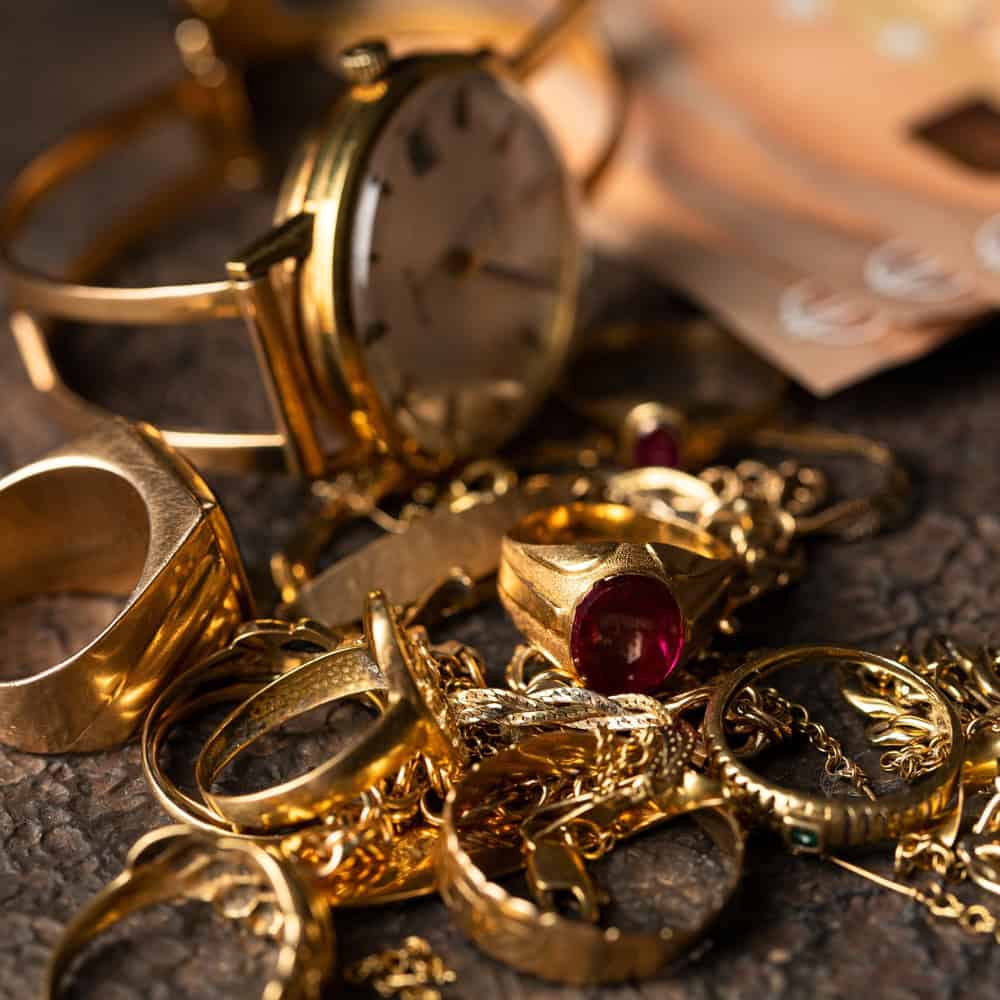
A lot of people assume their old jewelry isn’t worth much. A broken chain, a ring from a relationship that ended, a bracelet inherited from a grandparent that doesn’t match anything you own — these feel like clutter. But precious metal is precious metal. Gold doesn’t lose its melt value because it’s out of style or missing a clasp.
We buy gold in all karats — 10K, 14K, 18K, and 24K — along with silver, diamonds, platinum, estate jewelry, and luxury watches. The offer is based on the metal’s weight and purity, the current spot price of gold, and whether the piece carries any designer or brand premium above melt value. A Rolex or a Tiffany piece, for example, typically commands more than raw melt value because the secondary market for those items is active and strong.
What can increase your offer: having the original box and papers for a watch, a GIA certificate for a diamond, or documentation showing a piece’s provenance. These aren’t required — we evaluate everything using professional testing equipment regardless — but they give us more to work with and can push the number higher.
What doesn’t matter: whether the piece is broken, whether you have the original receipt, or whether it’s been sitting unworn for a decade. If it contains precious metal, it has value. Bring it in and find out what it’s actually worth before you assume otherwise.
One thing worth knowing before you come in: you can check the current spot price of gold online. It changes daily. Knowing the rough weight and karat of what you have gives you a baseline to evaluate any offer you receive — not just ours. That’s how a fair transaction works.
Jewelry Buyers in Nassau County: What Separates a Fair Offer from a Lowball
The fear of getting lowballed is the number one reason people hesitate to walk into a jewelry buyer or pawn shop. It’s a fair concern — not every buyer operates the same way, and without knowing what your piece is worth, you’re negotiating blind.
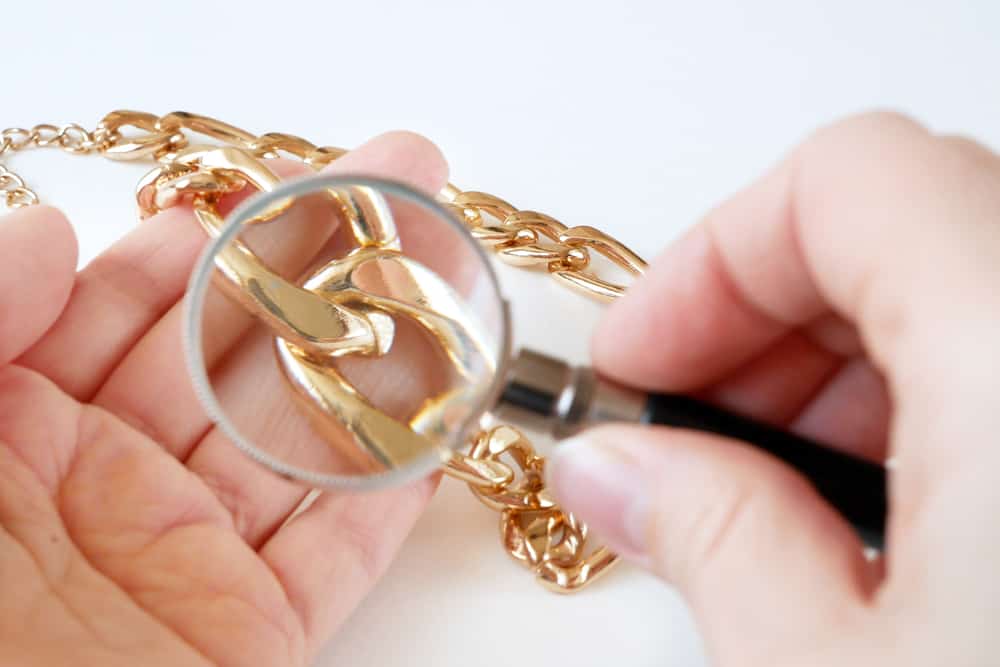
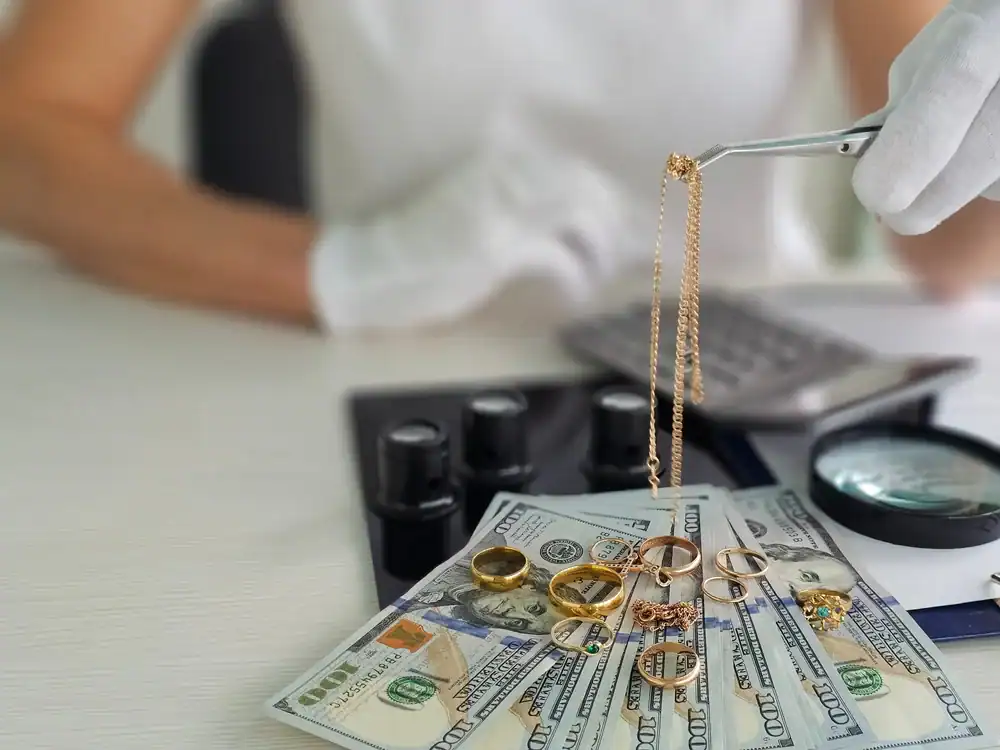
Here’s what a reputable buyer actually does: we test your item in front of you using calibrated equipment, weigh it on a scale you can see, reference the current spot price, and show you the math behind the offer. You know exactly what you’re being offered and why. Then you decide. There’s no pressure, no countdown clock, no “this offer expires in five minutes.” A legitimate buyer wants you to feel confident in the transaction — because that’s how repeat customers and referrals happen.
Industry data puts fair payouts somewhere between 65% and 88% of melt value from reputable buyers. Low-quality operators can go as low as 20%. That’s a wide range, and it’s exactly why choosing who you sell to matters as much as deciding to sell at all.
We’ve been serving Nassau and Suffolk County residents for years, and we were voted Best Pawn Shop on Long Island by the Long Island Press — not a self-claimed title, but an editorially awarded one from a publication Long Islanders actually read. That recognition reflects what our customers consistently tell us: the process is transparent, the offers are fair, and there’s no pressure to accept anything you’re not comfortable with.
For Nassau County residents who’ve spent years accumulating fine jewelry — through Sweet 16s, anniversaries, graduations, and the kind of milestone gifting that’s embedded in Long Island culture — we understand that some of these pieces carry more than monetary value. That’s part of why we also offer collateral loans, which brings us to the next decision most sellers face.
Back-to-School Expenses: Should You Sell Your Jewelry or Pawn It?
This is the question most people don’t think to ask until they’re already standing at the counter. Selling and pawning are two different transactions with different outcomes, and the right choice depends on how you feel about the item and how certain you are about your cash flow over the next few months.
Selling is permanent. You hand over the piece, you receive cash, and the transaction is done. If you’re confident you don’t want the item back — or if it’s something you’ve genuinely forgotten you owned — selling usually puts more cash in your hand immediately.
Pawning is temporary. You use the item as collateral for a short-term loan, receive cash now, and reclaim the piece later by repaying the loan plus interest. It’s a reversible decision, which matters if the jewelry has sentimental value or if you’re not entirely sure you want to part with it permanently.
How Collateral Loans Work — and When Pawning Makes More Sense
A collateral loan works like this: you bring in your item, we assess its value, and we offer you a loan based on a percentage of that value. We offer up to 70% of item value on collateral loans. No credit check. No impact on your credit score. The loan is secured by the item itself, not your financial history.
If you repay the loan within the agreed term, you get your jewelry back. If you decide not to repay — or if circumstances change — we keep the item. There’s no collections process, no credit reporting, no penalty beyond losing the piece. That’s the nature of a collateral loan, and it’s why many people prefer it over a payday loan or a credit card advance when they need cash quickly.
For Nassau County families navigating a particularly expensive back-to-school season, this option makes a lot of sense. You get the cash you need in August, cover what you need to cover, and once the dust settles and things stabilize, you can reclaim the item. Many of our customers use this exactly that way — a short-term bridge, not a permanent goodbye.
One actual customer put it plainly in a review: “I was going to take an online payday loan when my sister suggested I sell jewelry I no longer wanted.” That comparison is worth sitting with. A payday loan charges high interest and has to be repaid fast. A collateral loan uses something you already own, carries no credit implications, and gives you the option — not the obligation — to get the item back. For a lot of people, that’s a meaningfully better deal.
Transactions are typically completed within an hour. You don’t need an appointment. Walk in, bring the item, and walk out with cash the same day.
What to Bring and What to Expect When You Come In
The process is simpler than most people expect. You bring the item. We test it using professional equipment — the kind that measures metal purity accurately, not guesswork. We weigh it, reference the current market price, and make you an offer. You’re welcome to ask questions at any point. You’re also welcome to decline and walk out. There’s no obligation to sell or pawn anything just because you walked in.
For gold and silver jewelry, bring whatever you have — rings, chains, bracelets, earrings, broken pieces, mismatched sets. All of it can be evaluated. For luxury watches, especially Rolex or Breitling, bring the box, papers, and any service records if you have them. These documents don’t change what the watch is, but they can meaningfully increase what we offer because they matter to the buyers in the secondary market.
For diamond pieces, a GIA grading certificate is helpful if you have one. Again, not required — we evaluate stones independently — but it gives us more complete information and can result in a higher offer.
One thing that surprises a lot of first-time sellers: you don’t need to know what your jewelry is worth before you come in. That’s our job. Plenty of people walk in thinking a piece is worth very little and leave having received a real offer on something they’d written off. The only way to know is to have it tested by someone who knows what they’re looking at.
We’re fully licensed and insured, and as an Authorized Ball Watch Dealer, we have formal brand relationships that most pawn shops simply don’t. That matters when you’re bringing in something valuable and want to know it’s being handled and evaluated by people who actually know the category. Nassau County residents with fine jewelry, estate pieces, or luxury watches deserve a buyer who understands what they’re holding — not someone making a rough guess.
When Is the Right Time to Sell Jewelry for Back-to-School Cash?
The honest answer: the window is right now. New York schools start in early September, which means August is when Nassau County families are doing the bulk of their back-to-school spending. Gold prices are near record highs. The combination of peak financial need and peak selling conditions doesn’t come around every year.
If you have jewelry you don’t wear, don’t need, or haven’t thought about in years, converting it to cash before the season peaks is a straightforward decision. And if you’re not ready to part with something permanently, the collateral loan option keeps the door open.
We’re located at 1786 E. Jericho Turnpike in Huntington — a short drive from Nassau County communities along the Jericho Turnpike corridor. Stop in, bring what you have, and find out what it’s worth. No pressure, no appointment needed, and in most cases, cash in hand the same day.