Summary:
You’re probably not here because you love the idea of selling your grandmother’s ring. You’re here because you’ve inherited jewelry you don’t know what to do with, and you want to handle it right — fairly, thoughtfully, and without getting taken advantage of.
That’s a reasonable place to be. Estate jewelry selling is one of those topics that sounds simple until you’re actually in it. The pieces have real financial value, but they also carry weight that has nothing to do with money. Getting the process right matters on both levels.
Here’s what you need to know — about valuation, authentication, timing, and what separates a trustworthy buyer from one who’s just looking to flip your piece at a profit.
How Estate Jewelry Selling Actually Works
Most people walk into the estate jewelry selling process with one assumption: the number on the insurance appraisal is what the jewelry is worth. It’s not. Insurance appraisals reflect replacement value — what it would cost to buy a comparable piece new at retail today. That number is typically two to three times higher than what the piece would actually sell for on the open market.
For legal and estate purposes, what matters is Fair Market Value — the price a knowledgeable buyer would pay a willing seller, with no pressure on either side. This is the standard the IRS uses, the standard Nassau County Surrogate’s Court recognizes in probate proceedings, and the standard that determines whether an estate is divided equitably among heirs.
Understanding this gap upfront saves a lot of frustration. It’s not that buyers are lowballing you when they come in under the insurance figure — it’s that the two numbers are measuring entirely different things.
What Determines the Value of Inherited Jewelry
Value in estate jewelry comes from a combination of factors, and not all of them are obvious. The metal content — gold, silver, platinum — provides a floor. Right now, with gold trading near historic highs, that floor is higher than it’s been in years, which is genuinely good news for sellers. But metal content alone rarely tells the full story.
Gemstones add value based on the four Cs: cut, color, clarity, and carat weight. A well-cut, high-clarity diamond in a well-made setting is worth considerably more than a comparable stone in poor condition. The same logic applies to colored gemstones — sapphires, rubies, and emeralds all have their own grading standards and market dynamics.
Then there’s the maker’s mark. If the piece was made by Tiffany & Co., Cartier, Van Cleef & Arpels, or another recognized designer, that signature can add a meaningful premium above the raw material value. Long Island estates — particularly from communities like Great Neck, Manhasset, Old Westbury, and Garden City — frequently include pieces purchased from Manhattan’s Diamond District or high-end retailers, and those pieces often carry brand value that a less experienced buyer would miss entirely.
Condition matters too, though not always in the way people expect. Antique and vintage pieces often retain more value with their original patina intact. Cleaning or polishing before bringing a piece in can actually reduce its worth, especially if it damages the finish or removes evidence of age that collectors value. Bring pieces as-is and let the appraiser assess them in their current state.
Finally, provenance — the documented history of a piece — can add value when it’s traceable. A piece with a receipt, original box, or documentation tying it to a notable estate or period carries more weight than an identical piece without that paper trail.
How Authentication Works and Why It Matters Before You Sell
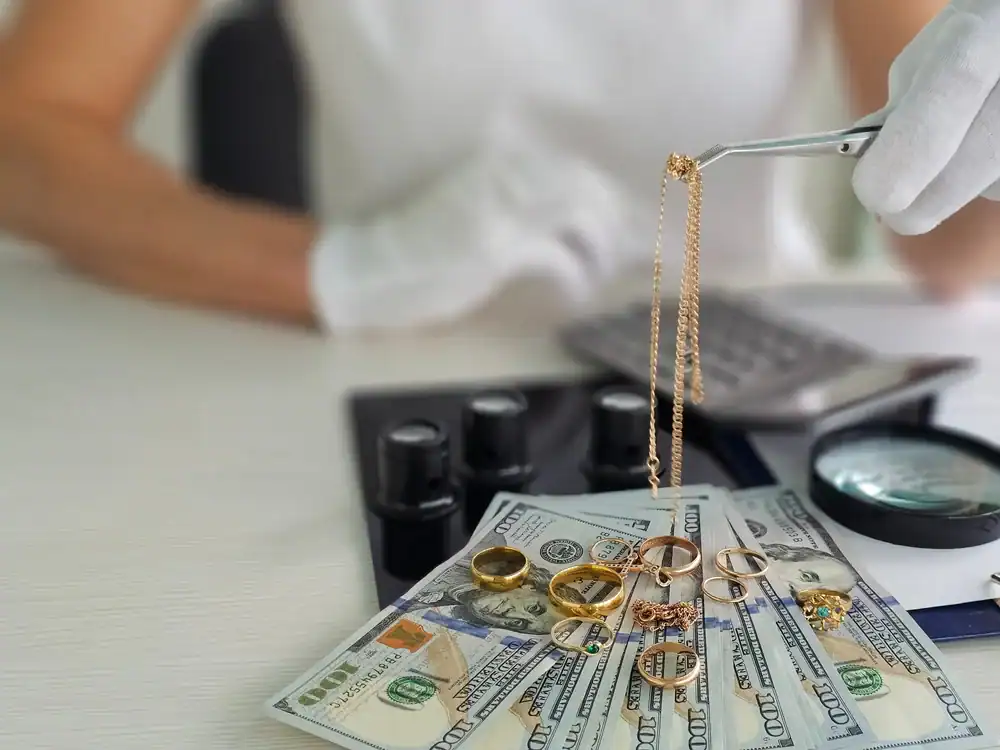
Authentication is the step that separates an educated offer from a guess. Before we put a number on inherited jewelry, we need to verify what we’re actually looking at — the metal purity, the gemstone grades, the maker’s identity, and the overall condition of the piece.
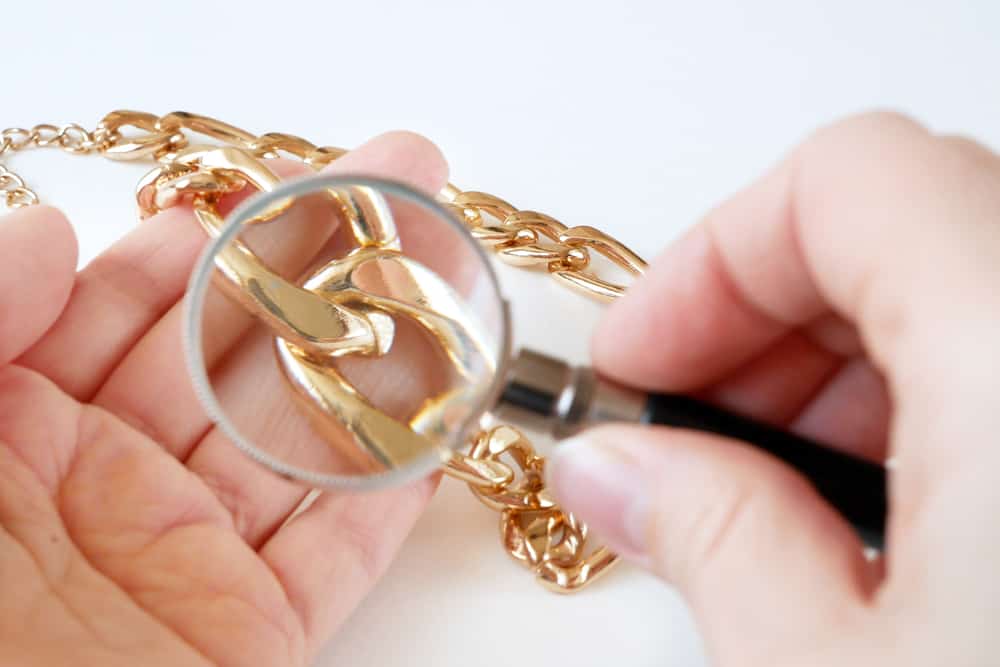
Metal purity is usually the most straightforward part. Gold is stamped with a karat mark — 10K, 14K, 18K, 24K — and those stamps can be verified with a testing kit or acid test. Platinum and silver have their own hallmarks. An experienced buyer can read these quickly and accurately.
Gemstone authentication is more involved. Diamonds and colored stones require loupe inspection, and in some cases, more advanced testing to distinguish natural stones from synthetic ones or from simulants like cubic zirconia. This is where the buyer’s training matters. A GIA-educated appraiser brings a standardized, internationally recognized framework to that evaluation — which means the assessment is based on established criteria, not gut instinct.
Maker’s marks require research. Some signatures are immediately recognizable. Others require cross-referencing against historical records, hallmark databases, or manufacturer documentation. A piece that looks like a standard gold bracelet might carry a mark that identifies it as the work of a mid-century American designer with a strong collector following. That mark could double or triple the offer.
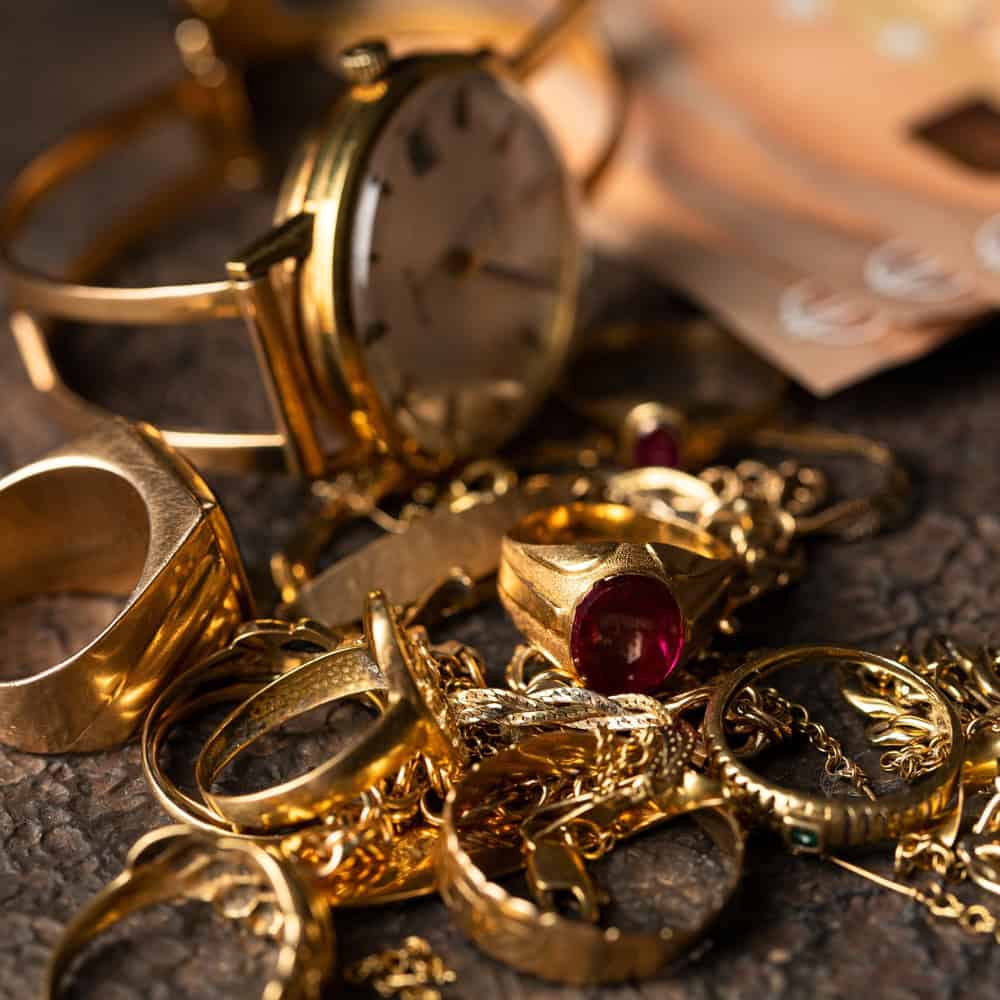
For Nassau County residents dealing with estate collections from older homes — particularly on the North Shore, where some families have held property for generations — this kind of deep-dive authentication can make a significant difference in what you walk away with. The jewelry that’s been sitting in a drawer for 40 years deserves the same careful evaluation as the piece you bought last year.
Maximizing What You Get When Selling Inherited Jewelry in Nassau County
Getting a fair price isn’t just about finding a buyer — it’s about finding the right buyer at the right time, with the right information in hand. Most people who feel like they were lowballed weren’t necessarily dealing with a dishonest buyer. They were dealing with a buyer who didn’t have the expertise to value the piece correctly, or who only offered melt value because that’s all they knew how to assess.
The difference between those two experiences — fair offer versus lowball — usually comes down to who’s doing the evaluating. An established local buyer with deep expertise in fine jewelry, luxury watches, and estate pieces will consistently offer more than a generalist, because they can actually move the piece through the right channel at the right price.
Timing matters too. With gold near multi-year highs, the metal content component of any gold piece is worth more right now than it has been in a long time. That’s a real advantage for sellers in the current market.
Should You Sell Estate Jewelry Now or Wait for the Right Moment
This is one of the most common questions executors and heirs ask, and the honest answer is: it depends on what’s driving the value of the specific pieces you have.
For gold jewelry where the primary value is the metal content, right now is a genuinely strong time to sell. Precious metal prices move in both directions, so waiting doesn’t guarantee a better number.
For designer or signed pieces, the calculus is different. Collector markets for certain designers go through cycles, and a piece that’s currently in demand might fetch a premium that won’t be available in two years. Conversely, a piece that’s not in strong demand right now might appreciate as tastes shift. We can give you a realistic read on where a specific piece sits in the current market.
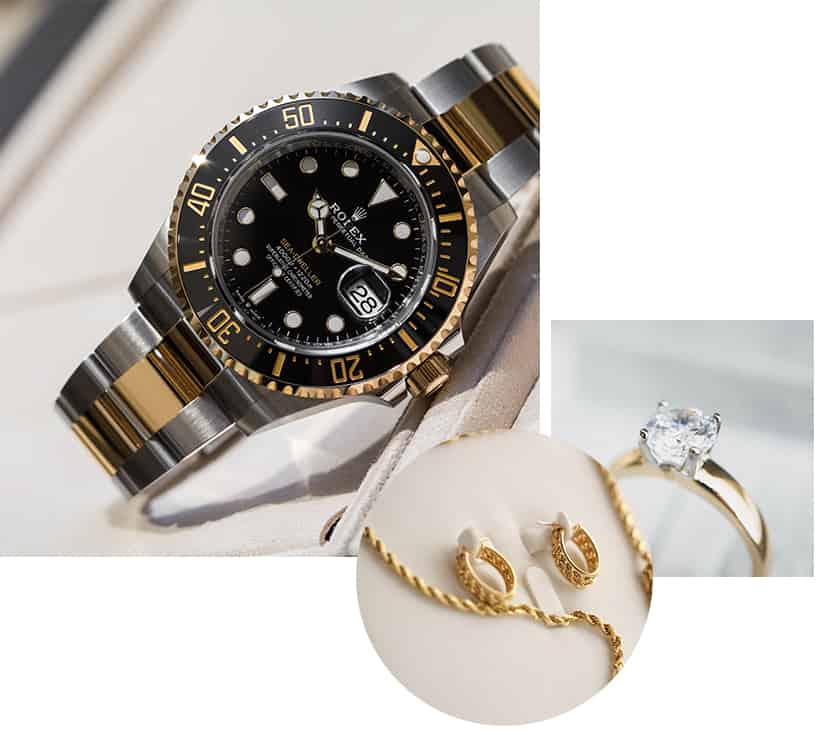
Luxury watches — particularly Rolex and other high-end brands — have their own secondary market dynamics. The Rolex market saw dramatic price swings between 2021 and 2024. A buyer who tracks that market closely will offer a more accurate price than one who’s simply looking at the metal and movement. If you’ve inherited a luxury timepiece as part of an estate, it’s worth having it evaluated by someone who specializes in watches, not just jewelry.
The estate settlement timeline is another factor. Nassau County probate proceedings typically run six to eighteen months, and executors often have the legal authority to sell estate assets before the estate formally closes. Your estate attorney can clarify exactly when you’re authorized to sell — but in many cases, the window opens earlier than people assume.
How to Handle the Emotional Side of Selling a Family Heirloom
Nobody talks about this part enough. Selling inherited jewelry isn’t just a financial transaction — it’s a decision you make while you’re grieving, often under time pressure, sometimes with family members who don’t agree on what should happen. That combination makes the process harder than it needs to be, and it makes sellers more vulnerable to making decisions they later regret.
The most important thing you can do is separate the appraisal from the decision to sell. Getting a professional valuation doesn’t commit you to anything. It just gives you accurate information — which is exactly what you need before you can make a thoughtful choice. Knowing what something is actually worth, as opposed to what you assumed it was worth, often clarifies the decision significantly.
When multiple heirs are involved, an objective third-party appraisal becomes even more valuable. Family disagreements about inherited jewelry are rarely really about the jewelry — they’re about fairness, about feeling heard, about honoring the person who passed. A credible, documented valuation from a licensed, established buyer gives everyone a neutral number to work from. It takes the argument off the table.
It also helps to reframe what selling actually means. Converting inherited jewelry into cash that funds something meaningful — a grandchild’s education, a down payment, paying off debt — is often exactly the kind of practical generosity the person who left it behind would have wanted. The value doesn’t disappear when the piece changes hands. It transforms into something the family can actually use.
In Nassau County, where multi-generational wealth is common and estates often include significant jewelry collections accumulated over decades, this reframing matters. Pieces purchased at Tiffany’s on Fifth Avenue in 1965, inherited once already, and now sitting in a box in a Roslyn or Syosset home have already done their sentimental work. Letting them do financial work now isn’t a betrayal — it’s a reasonable next step.
A buyer who understands all of this — the financial complexity and the emotional weight — will handle the conversation differently than one who’s just trying to close a transaction. That difference is worth paying attention to when you’re choosing who to work with.
Finding a Trusted Estate Jewelry Buyer in Nassau County, NY
The short version of everything above: estate jewelry selling goes better when you understand the valuation standards, work with a buyer who has genuine expertise, and give yourself permission to take the time you need to make a confident decision.
Fair Market Value — not insurance replacement value — is the number that matters. Authentication and maker’s marks can significantly change what a piece is worth. And the emotional difficulty of the process is real, but it doesn’t have to drive the decision.
If you’re dealing with an estate in Nassau County — whether you’re in Garden City, Jericho, Oyster Bay, or anywhere along the North Shore — we’re a short drive up Jericho Turnpike and have been doing exactly this kind of work for years. Voted Best Pawn Shop on Long Island by the Long Island Press, with expertise in fine jewelry, estate pieces, and luxury watches, we offer free appraisals with no pressure and no obligation. Come in, find out what you have, and take it from there.