Summary:
Most people selling gold for the first time don’t know what a fair offer looks like. They walk in, hand over a ring or a chain, watch someone weigh it, and hope the number they hear sounds right. That’s not a great position to be in.
The good news is that the process isn’t complicated once you understand it. Reputable buyers of gold follow a clear, transparent process — and knowing what that looks like puts you in control of the conversation. This guide covers what to expect, how pricing actually works, and the warning signs that tell you to take your items somewhere else.
Understanding the Gold Market Before You Sell
The gold market moves constantly. Prices shift throughout the trading day based on the U.S. dollar, inflation data, Federal Reserve decisions, and global demand. What you see quoted online as the “gold price” is the spot price — the current market rate for one troy ounce of pure, 24-karat gold traded at wholesale volume. That number is the starting point for any offer you’ll receive, not the finish line.
A trustworthy buyer will tell you what spot price they’re working from at the time of your visit. If a buyer quotes you a number without ever mentioning the spot price, that’s worth questioning. Transparency here isn’t a courtesy — it’s the baseline standard for anyone doing this honestly.
How Scrap Gold Prices Are Actually Calculated
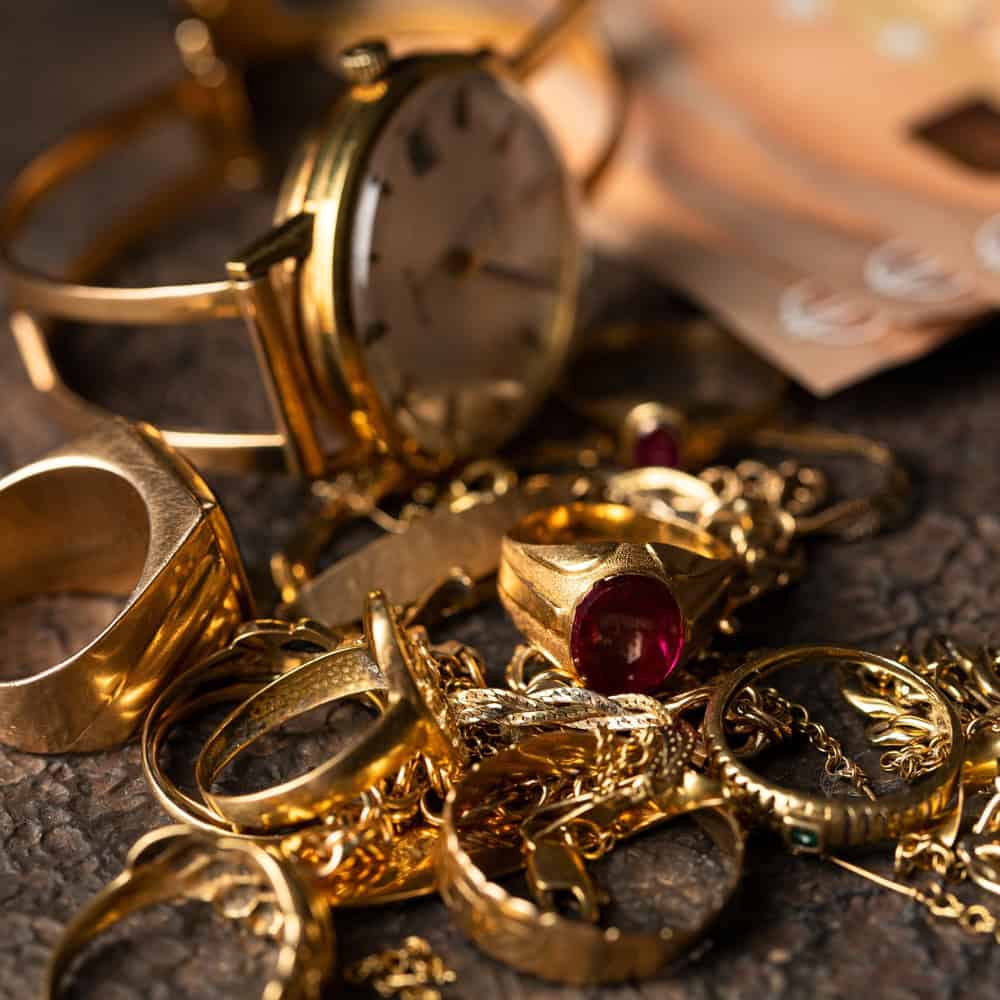
Scrap gold is any gold item valued primarily for its metal content rather than its craftsmanship — broken jewelry, mismatched earrings, dental gold, old chains, even gold-filled pieces. The pricing formula is straightforward once you see it: weight multiplied by purity percentage, multiplied by the current spot price, multiplied by the buyer’s percentage of spot. That last variable is where buyers differ most significantly.
Reputable buyers typically offer somewhere between 70% and 85% of spot for scrap gold. Predatory buyers — the kind you’ll find at temporary mall kiosks or through cash-for-gold mailers — sometimes offer as little as 30% to 50% of spot. The difference on a single ounce of 14K gold can be hundreds of dollars, which is why understanding this math before you walk in matters.
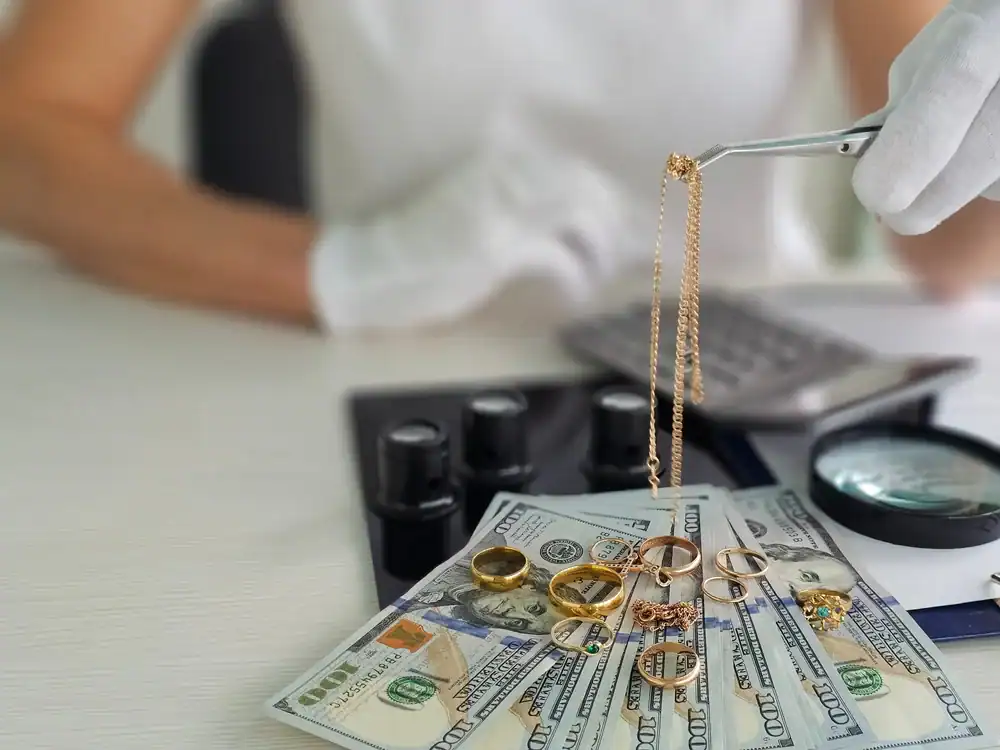
Karat purity has a direct impact on your offer. Pure 24K gold is 99.9% gold. 18K is 75% gold. 14K — the most common karat in American jewelry — is 58.3% gold. 10K is 41.7%. A buyer should always test your items for purity before making an offer, and that test should happen in front of you, not in a back room. Common methods include acid testing and XRF (X-ray fluorescence) analysis, with XRF being the more accurate, non-destructive option.
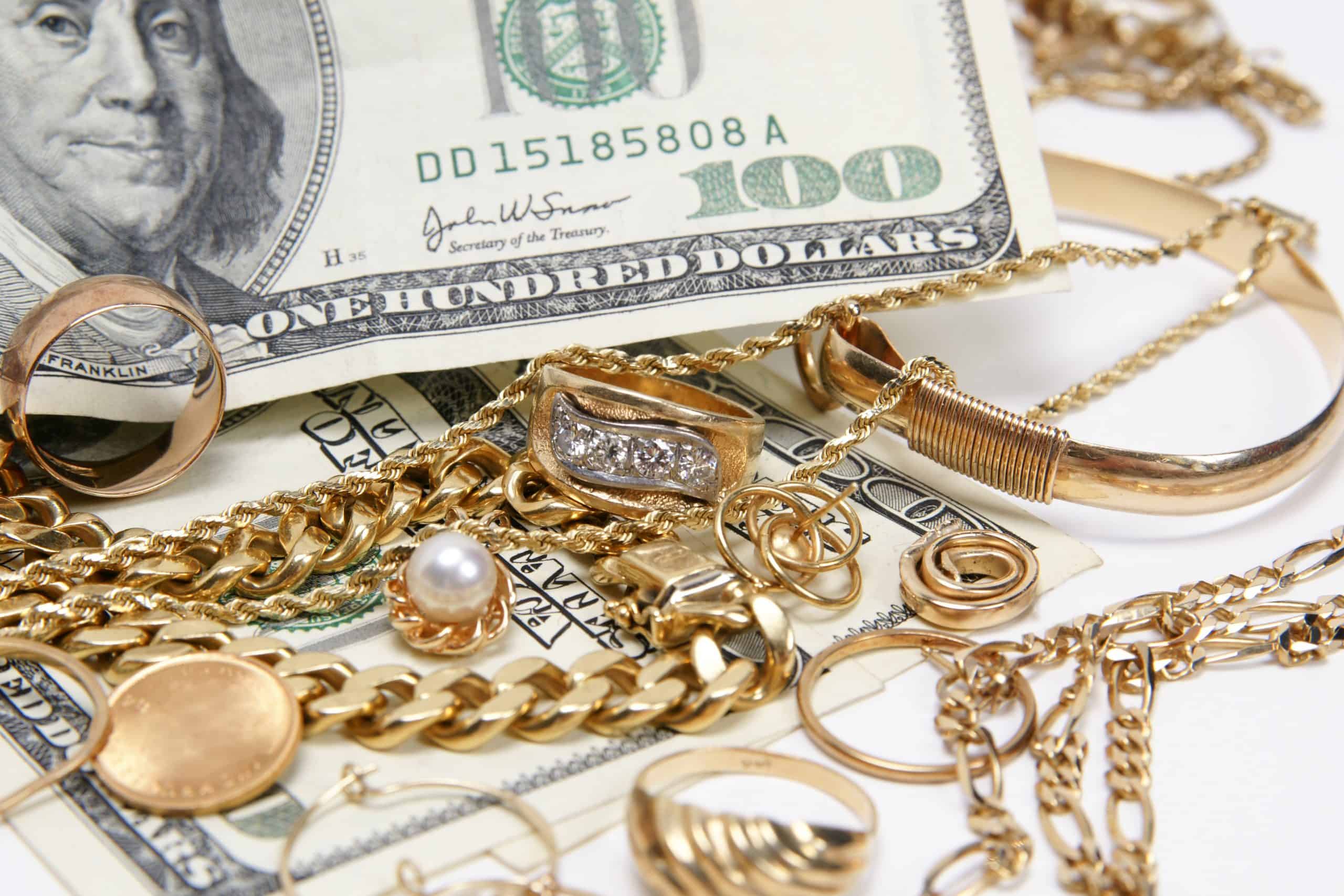
One thing that often goes overlooked: not every buyer evaluates the full value of a piece. Some buyers strip out the gold content, calculate a melt value, and ignore everything else — including diamonds or other gemstones set in the piece. If you’re selling a diamond-set gold ring, you want a buyer who accounts for the total value of the item, not just the metal. That distinction can make a meaningful difference in what you walk out with.
Red Flags That Tell You to Walk Away From a Gold Buyer
There are buyers of gold who operate honestly and buyers who count on the fact that you don’t know what your items are worth. Knowing the difference before you sit down across from someone is the most useful thing this checklist can give you.
The clearest red flag is a buyer who takes your items out of sight to test or weigh them. Every step of the process — weighing, testing, the offer calculation — should happen in front of you, on a certified scale, with the results visible. If someone needs to disappear into the back with your jewelry, that’s not a standard procedure. It’s a problem.
Watch out for buyers who make an offer without referencing the current spot price or explaining how they arrived at their number. A flat offer with no breakdown isn’t transparency — it’s a take-it-or-leave-it approach designed to work in their favor. You should be able to see exactly how the offer was calculated.
Pressure is another signal worth taking seriously. A legitimate buyer will give you time to think, encourage you to compare offers, and not make you feel like the deal expires the moment you hesitate. Any buyer who rushes you, creates urgency, or makes you feel like walking out is a mistake is not operating in your interest.
Finally, verify licensing. In New York State, pawnbrokers and precious metal dealers are required to be licensed. Nassau County and Suffolk County municipalities add their own layers of oversight. Licensed dealers are required to maintain transaction records and report to local authorities — a consumer protection measure that benefits you as the seller. A buyer who can’t or won’t confirm their licensing status is one you don’t need to do business with.
Why Nassau County Sellers Should Know Their Local Options
Nassau County has no shortage of gold buyers — pawn shops, jewelry stores, mall kiosks, online mail-in services, and everything in between. That variety sounds like a good thing, but it mostly creates noise. The real question isn’t how many buyers exist. It’s how many of them have the licensing, the expertise, and the track record to give you a fair deal on a piece that might have real value.
Nassau County residents tend to have higher-value pieces than the national average — 18K and 22K gold, branded jewelry, diamond-set rings, estate pieces that have been sitting in a drawer for decades. That profile deserves a buyer with the knowledge to evaluate it properly, not just someone who can calculate a melt value.
What to Look for in a Gold Buyer Near Nassau County, NY
The most important thing you can do before selling is verify that the buyer is licensed, established, and has a real track record you can check. Reviews on Google and Yelp tell you a lot — not just the star rating, but the pattern. Do reviewers mention fair prices? Transparency? Staff who explained the process clearly? Those details matter more than a polished website.
Physical presence matters too. A buyer with a permanent storefront at a fixed address, who has operated in the same location for years, is accountable in a way that a pop-up buyer or a mail-in service simply isn’t. You can walk back in. You know where they are. That accountability changes how they operate.
Ask before you go whether the buyer values the full piece or just the metal. If you have a ring with diamonds or a gold bracelet with gemstone accents, you want someone who can evaluate the stones separately and factor them into the offer. A buyer who only prices the gold and ignores the rest is leaving money on the table that belongs to you.
It’s also worth knowing that selling isn’t your only option. If you need cash but aren’t ready to permanently part with a piece — maybe it belonged to someone you loved, or you think you might want it back — a collateral loan lets you use the item as security for a short-term cash advance without selling it. No credit check, no lengthy approval process. You get the cash you need and the option to reclaim your item when you’re ready. We offer this alternative, and it’s a meaningful option worth asking about if you’re on the fence about selling.
FAQs: What Nassau County Residents Ask Before Selling Gold
**Do I need to know my gold’s karat or weight before I come in?**
No. That’s our job. We’ll test your gold for purity and weigh it on a certified scale during your visit. You don’t need to know anything in advance — just bring what you have. If you’re coming from Syosset, Jericho, Oyster Bay, or anywhere else in Nassau County and you’re not sure whether something is solid gold, gold-filled, or a mix, bring it anyway. Testing takes minutes.
**How is the cost of gold factored into the offer I receive?**
The cost of gold fluctuates daily, and the offer you receive is tied directly to where the spot price sits on the day you visit. We always reference the current spot price we’re working from and explain exactly how we arrived at your offer. Gold has been trading at or near record highs through 2024 and into 2025, meaning sellers in Nassau County are in a stronger position than they’ve been in years.
**How long does the process take?**
At our shop in Huntington, most sellers are in and out in about 15 minutes. We evaluate everything on-site — no shipping, no waiting for a check in the mail. Nassau County residents along the Jericho Turnpike corridor are typically a 10-to-20-minute drive away, and the whole transaction is completed before most people finish their morning coffee.
**What if I change my mind about selling?**
You’re never obligated to accept an offer. We’ll give you a number, explain how we got there, and let you decide without pressure. If the offer doesn’t work for you, you take your items and walk out. That should always be an option.
**Is now a good time to sell gold in Nassau County?**
Given where gold prices are right now, yes — it’s one of the better windows sellers have seen in a long time. But timing the market perfectly matters less than choosing the right buyer. A fair buyer at peak prices beats a low-ball offer regardless of what the market is doing.
How to Choose the Right Buyers of Gold and Walk Away Fairly Paid
Selling gold doesn’t have to be a leap of faith. When you understand how pricing works, what the process should look like, and what separates a trustworthy buyer from one who’s banking on your uncertainty, the whole thing becomes straightforward.
The short version: look for a licensed, established buyer with a physical presence, transparent testing and weighing done in front of you, a clear connection to the current spot price, and reviews from real customers who mention fairness and honesty by name. Avoid anyone who rushes you, tests your items out of sight, or can’t explain how they arrived at their offer.
If you’re in Nassau County and want to work with a buyer who checks every one of those boxes, we’re located at 1786 E Jericho Turnpike in Huntington — a straightforward drive from most of Nassau County — and we’ve been voted the Best Pawn Shop on Long Island by the Long Island Press. Bring what you have. We’ll tell you exactly what it’s worth.