Summary:
You need money, and you need it soon. Maybe it’s a vacation you’ve been putting off for two years, a property tax bill that snuck up on you, or just a gap between paychecks that got wider than expected. Whatever the reason, the pressure is real — and the last thing you want is to make a decision you’ll be paying for months down the road.
Most people go straight to payday loans or cash advances because they seem like the obvious move. But there’s a better option that a lot of Nassau County residents overlook entirely: the jewelry sitting in a drawer at home. Here’s what you need to know before you sign anything.
Quick Cash Loans vs. Jewelry Sales: What Nassau County Residents Are Actually Choosing
The payday loan industry is built on one thing: the assumption that you don’t have other options. You walk in, show a pay stub, and walk out with cash — but at an average APR of around 391%, that $400 loan costs you $60 in fees two weeks later. Miss the repayment window and it rolls over, and suddenly you’re paying interest on interest.
Selling jewelry works differently. You bring in a piece you’re not using, get a professional appraisal on the spot, and walk out with cash — often within the hour. No application. No credit check. No debt. The transaction is done, and so is the obligation.
For Nassau County homeowners dealing with some of the highest property taxes in the country, that distinction matters. Adding a short-term loan with triple-digit interest to an already stretched budget is a risk that a clean jewelry sale simply doesn’t carry.
Cash Advance vs. Pawn Loan: What the Real Cost Difference Looks Like
A cash advance — whether from a payday lender or pulled directly from a credit card — is one of the most expensive ways to borrow money that most people don’t fully understand until they’re already in it. Credit card cash advances typically run 25%–30% APR with a 3%–5% upfront transaction fee and zero grace period, meaning interest starts accruing the moment you take the money. Payday cash advances are worse — the standard fee of $15 per $100 borrowed translates to an APR of roughly 391% on a two-week loan.
Pawn loans are regulated differently. In New York State, licensed pawnbrokers operate under General Business Law Article 5, which sets maximum interest rates and fee structures. That legal cap is a consumer protection that no online payday lender or out-of-state cash advance app is required to follow. When you take a pawn loan at a licensed shop in Nassau County, the state has already put a ceiling on what you can be charged.
The other critical difference is what happens if you can’t repay. With a payday loan or cash advance, a missed payment means late fees, potential credit bureau reporting, and in some cases debt collection. With a pawn loan, the worst outcome is that the shop keeps your item. That’s it. No collections call. No hit to your credit score. No legal exposure. For someone who’s already managing tight finances, that’s not a small distinction — it’s the whole ballgame.
We offer collateral loans of up to 70% of an item’s assessed value, which is above the industry average of 25%–60%. That means if you bring in a piece worth $1,000 on the open market, you could walk out with up to $700 in your pocket — same day, no paperwork, no credit check. Compare that to a payday lender who hands you $400 and expects $460 back in two weeks, and the math isn’t close.
How Pawn Shop Appraisals Actually Work — and Why It Matters for Your Offer
One of the most common reasons people hesitate before walking into a pawn shop is that they don’t know what to expect. Will the appraisal be fair? Will the offer be insulting? Will the whole thing feel rushed or uncomfortable? These are reasonable questions, and the honest answer depends entirely on who you’re dealing with.
At a reputable shop, the appraisal process is transparent and happens in front of you. For gold and silver, that means testing karat weight using professional-grade equipment — acid test kits, electronic gold testers, or XRF analyzers — and calculating value against the current spot price. For diamonds and fine jewelry, it means loupe magnification, stone grading, and an assessment of market demand for that specific piece. For luxury watches, it means knowing the reference number, the movement condition, and the current secondary market pricing — which is a very different skill set than appraising a gold chain.
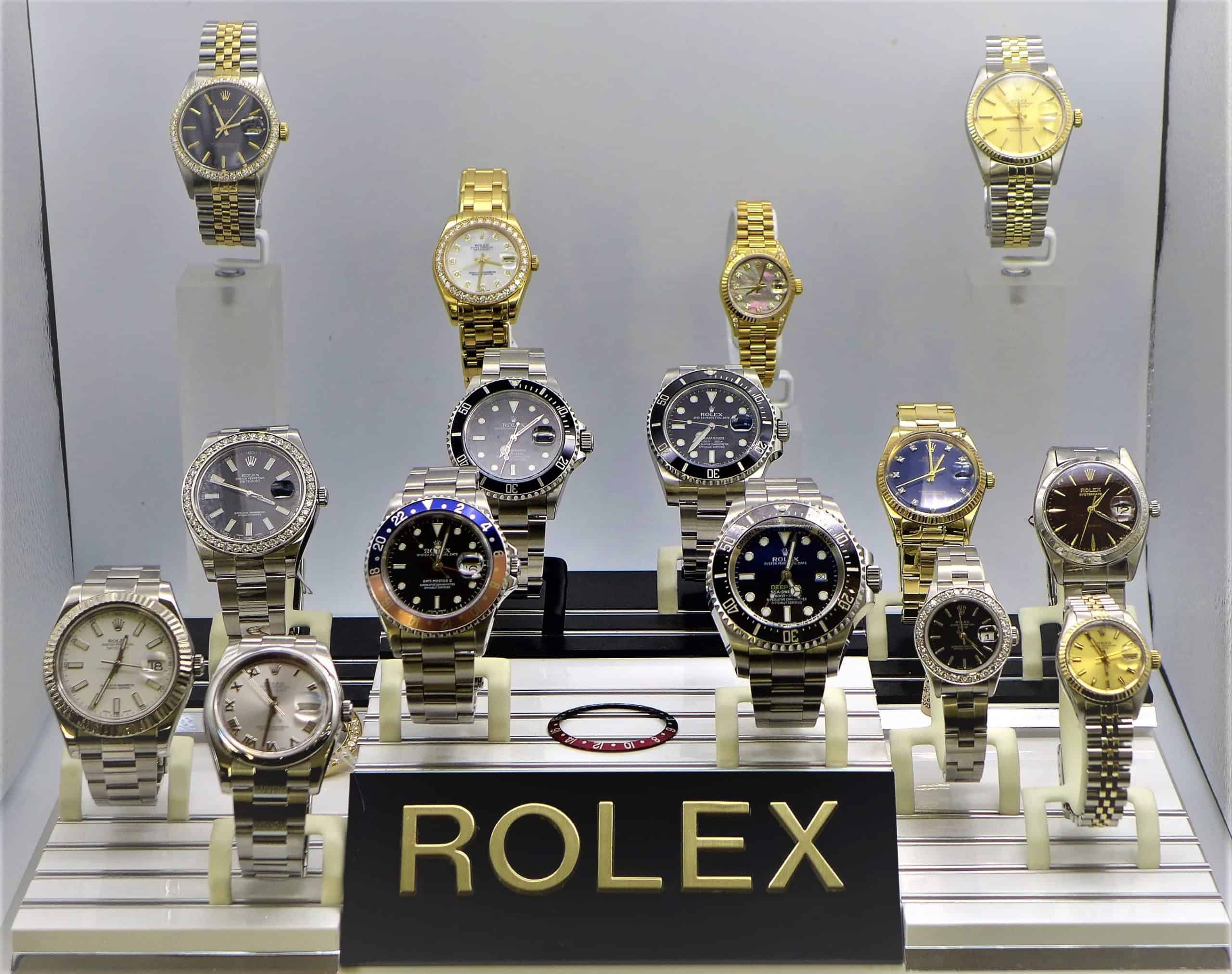
That last point is worth emphasizing. Most pawn shops don’t have deep expertise in luxury timepieces. We do. As an Authorized Ball Watch Dealer and a Rolex specialist — with pre-owned Rolex watches in our inventory starting at $2,995 — we operate on both sides of the luxury watch market. That means when you bring in a Rolex or a Breitling, the person evaluating it actually knows what it’s worth and what the current buyer demand looks like. You’re not getting a guess. You’re getting a market-based number from someone who buys and sells these watches regularly.
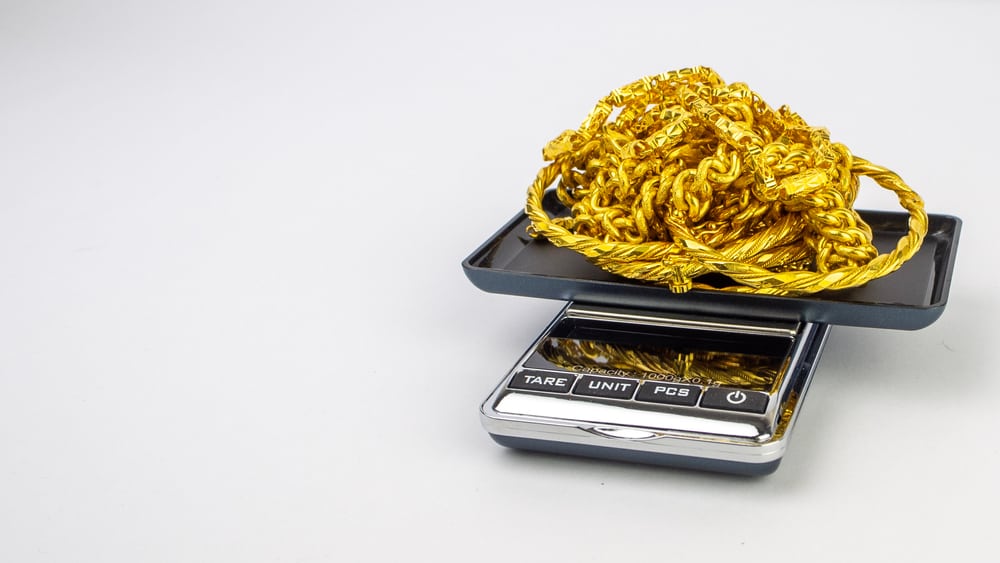
The same principle applies to gold jewelry. With gold prices near all-time highs in 2024–2025, the cash value of pieces that have been sitting unworn in a jewelry box is often significantly higher than people expect. A 14k gold necklace weighing 10 grams could be worth $300–$400 or more at current spot prices. An inherited set of gold rings might yield enough to cover a week’s vacation without touching a credit card.
Vacation Funding on Long Island: Why Summer Is the Best Time to Sell Gold
Long Island families have a strong tradition of summer travel — the Hamptons, beach rentals, trips out of state, or just a week somewhere that isn’t the commuter grind. The problem is that summer expenses tend to hit all at once: travel costs, kids’ activities, home projects, and for many Nassau County homeowners, the mid-year property tax installment.
The timing works in your favor right now. Gold is trading near all-time highs, which means the jewelry you’ve been holding onto is worth more in cash today than it has been in years. Selling in summer — when you actually need the money — rather than waiting for prices to shift is a straightforward way to get the most out of what you already own.
Pawning vs. Selling Precious Metals: How to Decide Based on Your Timeline
The choice between pawning and selling comes down to one question: do you want the item back? If the answer is yes, a pawn loan makes sense. If the answer is no — or if the piece is something you genuinely haven’t worn or used in years — selling outright will typically put more money in your pocket, because we’re buying permanently rather than lending against the value.
Pawn loans in New York typically run 30 to 90 days. During that window, you can repay the principal plus interest and reclaim your item. You can also extend the loan by paying interest only, which buys you more time without losing the piece. The flexibility is real, but so is the cost — every month you extend is another month of interest charges, even if they’re state-regulated.
For vacation funding specifically, the math usually favors selling if the item is something you’re indifferent about keeping. Say you have a gold bracelet you inherited but never wear. Selling it outright gets you the full offer amount — no interest, no redemption deadline, no follow-up transaction required. You fund the trip, enjoy it, and come home with no new debt and no pending obligation. That’s a cleaner outcome than a pawn loan where you’re mentally tracking a redemption date from a beach somewhere.
On the other hand, if you have a piece with genuine sentimental value — an engagement ring from a previous relationship that you’re not ready to part with permanently, or a watch you’d want back eventually — a pawn loan preserves that option. You get the liquidity you need now, and you have the redemption window to reclaim it when your finances stabilize.
The key is being honest with yourself about which category your item falls into before you walk in. We’re happy to talk through both options with you and explain exactly what the numbers look like either way.
Maximizing Your Return on Gold and Silver in Nassau County This Summer
Nassau County has a strong culture of jewelry ownership — particularly in communities like Great Neck, Roslyn, Hewlett, and Garden City, where estate pieces, inherited jewelry, and fine gold are common in households that have been here for generations. A lot of that jewelry sits unworn. Some of it is outdated in style. Some of it carries memories that have faded. And right now, in a market where gold is trading near record levels, a lot of it is worth considerably more than most people realize.
Getting the most from a jewelry sale isn’t complicated, but it does require going to someone who knows what they’re looking at. The difference between a knowledgeable buyer and an uninformed one can be hundreds of dollars on a single piece. An appraiser who can distinguish between 10k, 14k, and 18k gold — and who uses calibrated testing equipment rather than eyeballing it — is going to give you an accurate number. One who can’t tell a VS1 diamond from an SI2 is going to undervalue the stone.
We’ve been voted the Best Pawn Shop on Long Island by the Long Island Press, and we’ve been serving Nassau and Suffolk County customers since 2010. That’s 15 years of people from Hempstead, Massapequa, Merrick, Levittown, and across Nassau County making the drive to East Jericho Turnpike because they got a fair number and a straight answer. The drive from most Nassau County towns is under 30 minutes, and the appraisal is free with no obligation to sell.
If you’re planning a summer trip and wondering whether the gold in your jewelry box could fund it — the honest answer is that it very well might. With current spot prices where they are, this is one of the better windows in recent memory to convert unworn metal into real money. And doing it debt-free, with no interest rate attached, is a fundamentally different outcome than putting the same trip on a credit card and spending the fall paying it off.
Emergency Cash in Nassau County: The Smarter Option Is Closer Than You Think
When you need money quickly, the options that feel most obvious — payday loans, cash advances, credit card debt — are often the most expensive ones. They’re designed to be easy to access and hard to escape. A jewelry sale or a pawn loan won’t work for every situation, but for anyone who owns gold, silver, fine jewelry, or a luxury watch they’re not using, it’s worth understanding the real numbers before committing to a high-interest product.
The core facts are simple: gold is near all-time highs, pawn loans in New York are state-regulated, and selling outright means walking out with cash and zero new debt. That’s a combination that’s hard to beat when summer expenses are stacking up and you’d rather enjoy your vacation than spend it calculating interest charges.
If you’re in Nassau County and want a straight answer on what your jewelry or watch is worth, we’re open seven days a week and the appraisal costs you nothing.