Summary:
If you’ve typed “silver value today” into Google, you’ve probably landed on a chart from a bullion site showing a number per ounce — and then wondered what that actually means for the flatware set in your cabinet or the coin collection in your basement.
The spot price is real. But it doesn’t tell you what a buyer will pay for your specific items, or why the number changes every day, or whether right now is a smart time to sell. Those are the questions this page answers. By the end, you’ll know how silver value is calculated, what’s driving the current market, and what to expect when you bring your silver in for an appraisal here in Nassau County.
Silver Spot Price Today: Real-Time Market Tracking
The silver spot price is the live, globally traded price for one troy ounce of pure silver at any given moment. It’s set by futures markets — primarily COMEX in New York — and it updates continuously during trading hours. When you see a number quoted on a bullion site, that’s the wholesale price for large-volume transactions between institutional traders.
What’s happening right now in that market is worth paying attention to. Silver has been above $65 per troy ounce as of mid-2026, more than double where it was a year prior. J.P. Morgan Research has forecast an average of $81 per ounce across 2026. For anyone sitting on silver they haven’t thought about in years, the timing matters.
What Is Silver Spot and Why Does It Change Every Day?
The silver spot price isn’t fixed — it moves constantly, and for reasons that go well beyond simple supply and demand. Understanding what’s behind those daily swings helps you make smarter decisions about when to sell and what to expect from an offer.
The U.S. dollar is one of the biggest drivers. Because silver is priced in dollars globally, when the dollar weakens, silver tends to rise in price — and vice versa. Federal Reserve decisions on interest rates ripple through the silver market almost immediately. When rates drop or the Fed signals looser monetary policy, investors often rotate into hard assets like silver, pushing prices up.
Industrial demand is the other major force — and it’s been the story of the last several years. Silver is a critical input in solar panels, electric vehicles, semiconductors, and AI infrastructure. Industrial applications consumed a record 680.5 million ounces of silver globally in 2024, accounting for roughly 61% of total demand. Solar photovoltaics alone went from 11% of industrial silver demand in 2014 to 29% by 2024. That structural shift in demand hasn’t reversed — it’s accelerating.
Then there’s the supply picture. The silver market has run a supply deficit for five consecutive years, with a cumulative gap of roughly 820 million ounces between 2021 and 2025 — equivalent to an entire year of global mine production. When demand consistently outpaces supply at that scale, price pressure builds. That’s a significant part of why silver has performed the way it has.
Gold price movements also pull silver along. The two metals trade in correlation, and when gold runs, silver typically follows — often with more volatility in both directions. Geopolitical events, trade policy shifts, and broader market uncertainty all factor in as well. On any given day, the number you see on a silver chart is the result of all of these forces settling into a price in real time.
How Silver Spot Translates to What You'll Actually Receive
This is where a lot of sellers get confused — and sometimes disappointed. The spot price is the starting point, not the final number. What you receive for your silver depends on three things: the weight of your items, the purity of the silver, and the buyer’s margin.
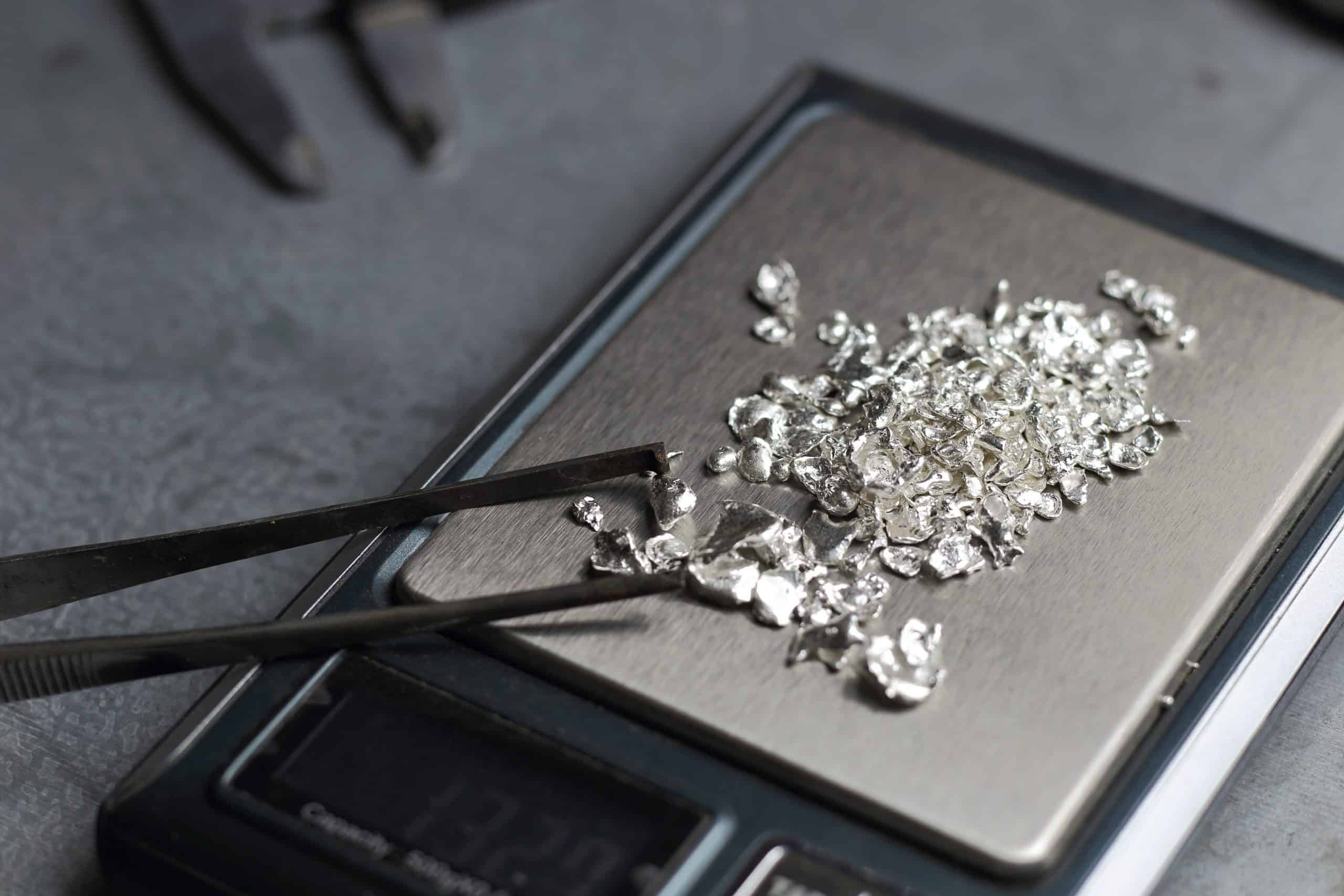
Weight is measured in troy ounces, not the standard ounces used on a kitchen scale. One troy ounce equals about 31.1 grams. We weigh your items on a calibrated scale in front of you, and the math should be visible and explainable.
Purity is where most people have questions. Sterling silver — the most common type found in flatware, jewelry, and hollowware — is 92.5% pure silver, marked .925. Coin silver, found in pre-1965 U.S. dimes, quarters, half-dollars, and dollars, is 90% pure. Fine silver bars and rounds are 99.9% pure. Each of these has a different melt value even at the same weight. Silver-plated items — a thin layer of silver over a base metal — have minimal melt value and are a different category entirely. We test your items to confirm purity, not guess.
Once weight and purity are established, the melt value is straightforward: spot price × weight in troy ounces × purity percentage. The offer we make will be a percentage of that melt value, adjusted for our cost of doing business and resale model. Because we operate both retail and wholesale — meaning we have multiple ways to move what we buy — we can typically offer a better percentage than shops that only sell retail. At current spot prices, even modest quantities of sterling silver are worth meaningfully more than they were two or three years ago.
Current Silver Price Per Ounce: What Nassau County Sellers Are Sitting On
Nassau County has one of the highest concentrations of inherited precious metal in the state. The affluent households of Great Neck, Garden City, Manhasset, Roslyn, and Mineola accumulated significant quantities of sterling silver through the mid-20th century — flatware sets from Gorham, Reed & Barton, Wallace, and Towle; tea services; candlesticks; picture frames; coin collections passed down through generations.
Most of that silver has been sitting in storage for decades. At today’s current silver price per ounce, it’s worth more right now than at almost any point in living memory. A full sterling flatware service for twelve can carry a melt value in the hundreds of dollars at current spot prices — and that’s before accounting for any collector or pattern premium.
Silver Price Per Ounce vs. What Your Specific Items Are Worth
Knowing the silver price per ounce is useful context, but it won’t tell you what your grandmother’s flatware set is worth until someone weighs it, tests it, and does the math. That gap between the number on a chart and the number on an offer is where most sellers feel uncertain — and where a knowledgeable buyer makes all the difference.
Take a common scenario: you’ve inherited a set of sterling silver flatware — twelve place settings, serving pieces included. It’s marked .925 on the back of each piece. At a spot price of $65 per troy ounce, the melt value of that set could range from $400 to well over $1,000 depending on total weight. Some patterns from well-known makers also carry collector demand that pushes the value above melt. Without a professional assessment, you have no way of knowing which side of that range you’re on.
Coin collections are another common find in Nassau County households. Pre-1965 U.S. silver coins — Morgan dollars, Peace dollars, 90% silver dimes and quarters — are known in the trade as “junk silver,” which is a misleading name. There’s nothing junky about them. At today’s spot price, a bag of circulated 90% silver coins carries real melt value that compounds quickly with quantity. A single Morgan dollar contains approximately 0.77 troy ounces of silver. At $65 per ounce, that’s nearly $50 in melt value per coin, before any numismatic premium.
The point is that the current silver price per ounce is the headline, but the details of your specific items determine your actual number. That’s why a no-obligation, in-person appraisal from someone with calibrated equipment and real market knowledge is worth more than any online calculator.
Is Now a Good Time to Sell Silver in Nassau County?
That’s the question most people are really asking when they search for silver value today. And the honest answer is: the macro backdrop is about as favorable as it’s been in a generation.
Silver hit a record high of $54.48 per ounce in October 2025 and has continued climbing. The structural supply deficit that’s been building for five years isn’t going away — industrial demand from solar, EVs, and electronics keeps growing while mine production hasn’t kept pace. Institutional forecasts from banks like J.P. Morgan point to continued strength. None of that guarantees tomorrow’s price, but it does mean the current environment is meaningfully different from where silver was three or four years ago.
The more practical question is whether waiting for a higher price is worth the risk of a pullback. Silver is volatile. It can move 5–10% in a week based on currency moves, Fed commentary, or shifts in investor sentiment. Waiting for a marginally better price and watching it drop instead is a frustrating outcome especially when today’s prices are already at multi-year highs.
There’s also a cost-of-waiting calculation that often goes unacknowledged. Silver sitting in a cabinet or a safe deposit box isn’t earning anything. If you have a financial need tuition, a tax bill, a home repair selling silver at a strong price is a straightforward alternative to carrying credit card debt at 20% or more. Several of our customers have made exactly that trade, and the math tends to be clear once you run it.
We’re not in the business of pressuring anyone to sell. But if you’ve been on the fence about whether to bring your silver in for an appraisal, the current market is a reasonable prompt to at least find out what you have. There’s no obligation, no credit check, and no cost to getting an accurate number from someone who does this every day.
Where to Get a Fair Silver Appraisal in Nassau County, NY
Silver value today is more than a number on a chart — it’s context for a decision you may have been putting off for years. Whether you have a single piece of jewelry, a full flatware service, or a coin collection that’s been sitting in a box since the 1980s, the current market gives you a real reason to find out what it’s worth.
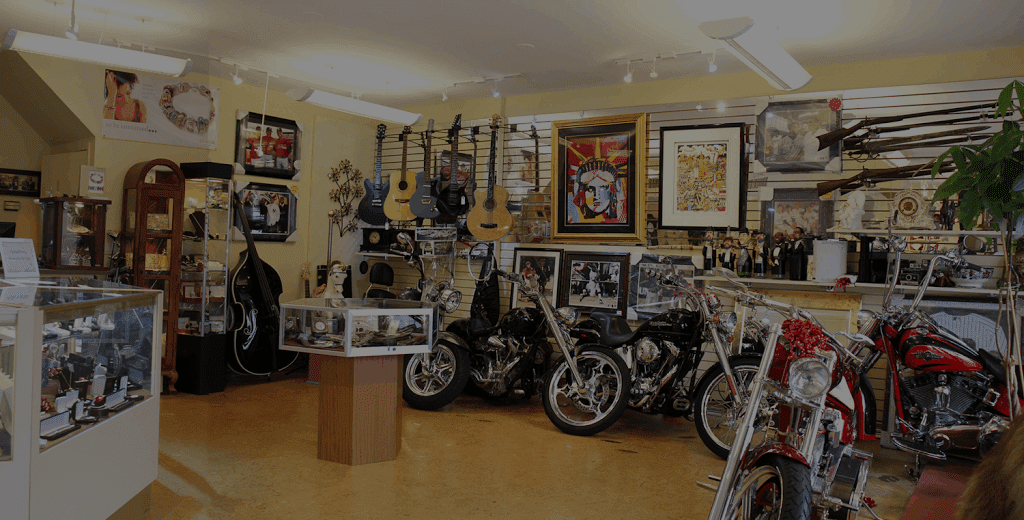
We’ve been voted the Best Pawn Shop on Long Island by the Long Island Press. We’re located at 1786 East Jericho Turnpike in Huntington — about 20 minutes from most of Nassau County via the Northern State Parkway or Route 25A — and we’re open seven days a week. We use calibrated scales and professional testing equipment, we explain every number, and we make offers based on real market data, not guesswork.
Bring your silver in. Find out what you have. There’s no pressure and no obligation — just a straightforward appraisal from people who know what they’re looking at.