Summary:
Most people who own gold don’t think of themselves as investors. They have a gold chain from their mother, a ring they no longer wear, maybe a few coins tucked away somewhere. But right now, in 2025, that gold is worth more than it has been at almost any point in modern history — and most people have no idea.
Understanding gold price history doesn’t require a finance degree. It just requires knowing what moved prices over the last fifty years, what’s moving them today, and what that means for the gold sitting in your drawer. That’s exactly what this guide covers — and by the end, you’ll have a much clearer picture of where things stand and what your options are.
Historical Gold Prices: Five Decades of Market Cycles
Gold’s price history reads like a timeline of everything that’s gone wrong — and right — with the global economy. From the collapse of the Bretton Woods gold standard in 1971 to the COVID-era surge and the record highs of 2025, gold has responded to every major financial shock with the same basic instinct: when confidence in currency and stability wavers, gold rises.
The long arc is clear. Gold opened the free-market era at roughly $41 per ounce in 1971. It crossed $3,500 in 2025. That’s not a straight line — there were brutal bear markets and long stretches of stagnation — but the direction over fifty years has been unmistakably upward. Knowing where those peaks and valleys fell helps you understand not just what gold is worth today, but why.
Historical Gold Prices: Decade-by-Decade Breakdown
The 1970s were gold’s first major bull run. Before 1971, the U.S. dollar was tied to gold at a fixed rate of $35 per ounce under the Bretton Woods system. When President Nixon severed that link, gold entered free-market trading and almost immediately began climbing. Americans also regained the legal right to own gold in 1974, which opened the market to a whole new pool of buyers. By 1980, gold had hit $850 per ounce — driven by oil shocks, runaway inflation, and the Iran hostage crisis. That was a 364% gain from the decade’s opening price of $183.
Then came the long hangover. From 1980 through the late 1990s, gold spent nearly two decades in decline. Real interest rates were high, the stock market was booming, and there wasn’t much appetite for a safe-haven asset when equities were delivering double-digit returns. By 1999, gold had fallen to around $255 per ounce — its modern-era low. A lot of people wrote it off entirely during that stretch.
The 2000s changed everything again. The dot-com crash, 9/11, the Iraq War, and eventually the 2008 Global Financial Crisis sent investors flooding back into gold. From roughly $270 at the start of the decade, gold climbed steadily to a then-record $1,920 per ounce in September 2011. That run was fueled by a weakening dollar, massive government stimulus, and a growing sense that the financial system was more fragile than anyone had admitted.
Gold pulled back after 2011 and spent most of the 2010s consolidating between $1,100 and $1,400. Then came 2020. The COVID-19 pandemic triggered the largest peacetime stimulus program in history, and gold crossed $2,000 per ounce for the first time in August of that year. It hasn’t looked back since.
Gold Chart: What's Driving the 2024–2025 Surge
If you’ve been watching the gold market price lately, the numbers are hard to ignore. Gold hit approximately $3,500 per ounce in April 2025 and reached an all-time high of $4,379 per troy ounce in October 2025. As of mid-2025, it was trading in the $3,650–$3,700 range — up roughly 40% year-to-date. That kind of move in a single year is exceptional by any historical standard.
Several forces are converging to drive this. Central banks around the world have been buying gold at a pace not seen in decades — over 1,000 tons annually — which creates sustained demand that retail selling alone can’t offset. At the same time, real interest rates remain low by historical standards, which historically favors gold over cash and bonds. Geopolitical uncertainty — ongoing conflicts, shifting trade relationships, and dollar credibility concerns — adds another layer of demand from investors seeking stability.
What does this mean if you own gold jewelry, coins, or bullion? It means the gold sitting in a box in your closet is likely worth significantly more than it was even two years ago. A piece your parents bought in the 1980s for a few hundred dollars may now carry a melt value in the thousands. Nassau County residents have been actively taking advantage of this surge — we’ve seen a meaningful uptick in sellers who finally did the math and realized what they were holding.
It’s also worth understanding that these cycles don’t last indefinitely. Gold’s history includes a 20-year bear market from 1980 to 2000. Nobody knows exactly when the current run peaks, but the historical pattern is clear: waiting for the perfect moment can mean missing a generational high.
What Nassau County Gold Owners Should Know Before Selling
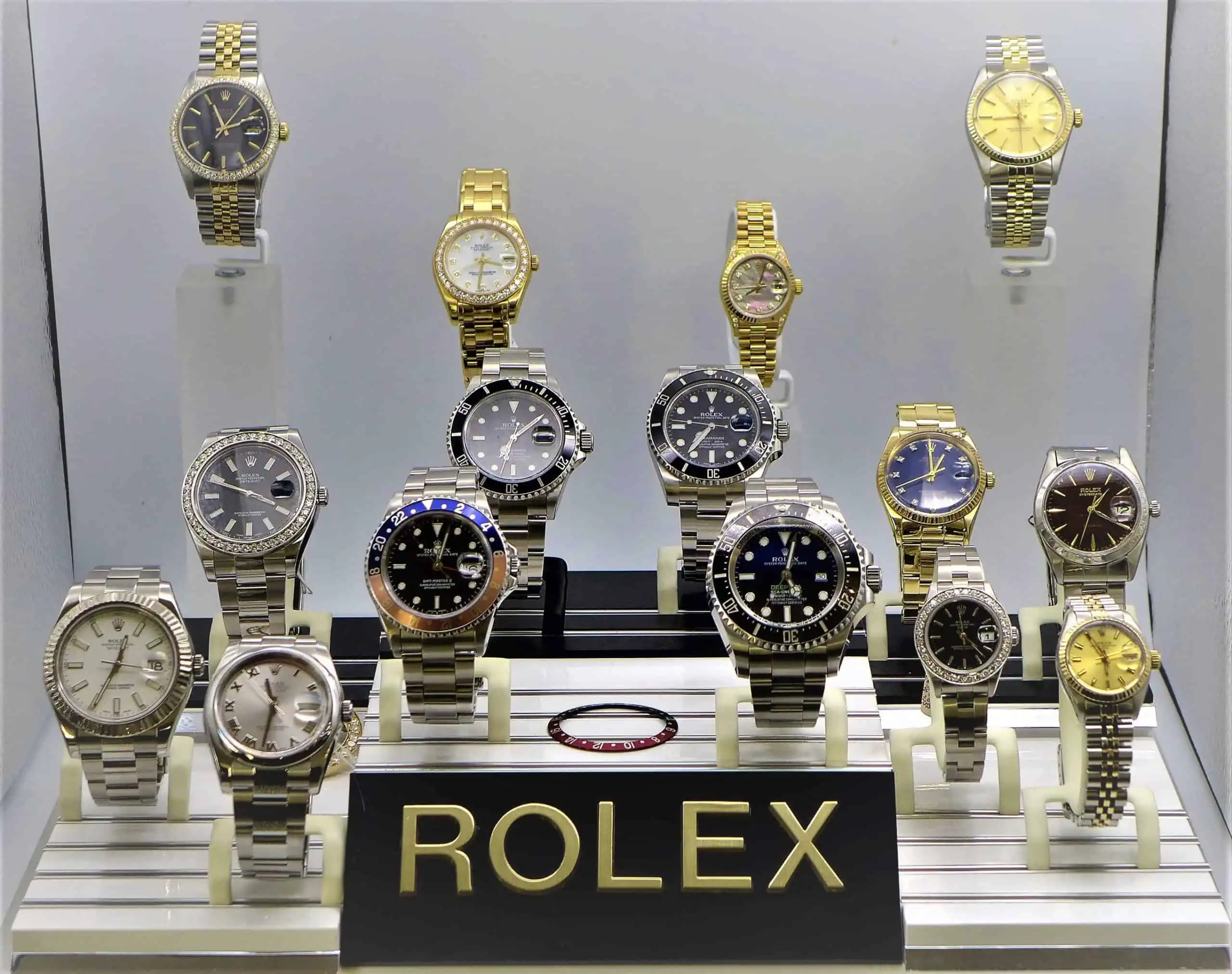
Nassau County has one of the highest concentrations of inherited wealth in the country. The North Shore communities — Great Neck, Manhasset, Roslyn, Garden City, Old Westbury — have been home to affluent families for generations, and with that comes a lot of gold: estate jewelry, vintage pieces, coins, and luxury watches that have been sitting in safe deposit boxes and dresser drawers for decades.
Understanding gold price history is directly useful here. When you know that gold has risen from $41 to over $3,500 in fifty years — far outpacing inflation — it reframes what you’re holding. That necklace from your grandmother’s estate isn’t a sentimental trinket with a small dollar value. At today’s gold market price, it may be worth more than you’d ever expect.
How Gold Is Actually Valued — And What You'll Realistically Receive
The spot price you see on a live gold chart is the benchmark for pure, 24-karat gold traded in bulk on global exchanges like COMEX and the London Bullion Market Association. It’s the right starting point, but it’s not the number you’ll walk away with — and understanding why helps you evaluate any offer you receive.
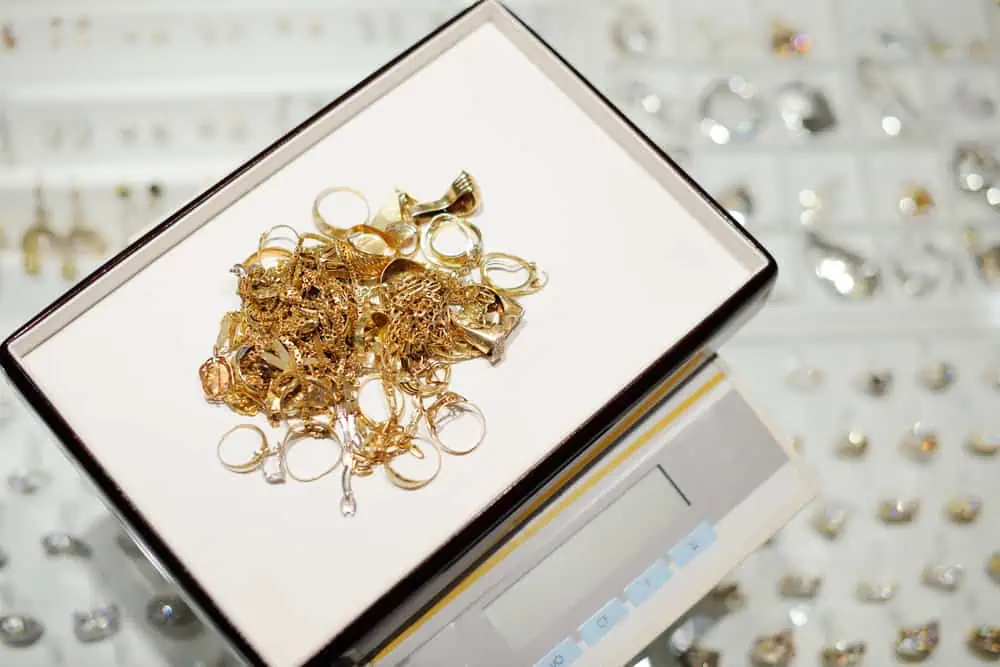
Gold jewelry is almost never 24-karat. Most pieces are 10K (41.7% pure), 14K (58.3% pure), or 18K (75% pure). So the first step is calculating the actual gold content of what you have, which requires knowing the karat and the weight in troy ounces. One troy ounce equals 31.1 grams — different from a standard ounce, which matters when you’re calculating melt value.
From there, we offer a percentage of that calculated melt value. Specialized precious metals dealers typically offer 70–90% of spot for pure gold content. We show you our scale, tell you the karat reading from our test, and walk you through the math. If a buyer won’t explain how they arrived at their number, that’s a signal worth paying attention to.
The testing process itself is straightforward. Most buyers use an acid test or an XRF spectrometer — a handheld device that reads metal composition accurately without damaging the piece. Either method gives a reliable karat reading in minutes. You don’t need to know your jewelry’s karat before you walk in. We’ll determine that for you, in front of you, before making any offer.
One more thing worth knowing: melt value isn’t always the ceiling. Some pieces — signed designer jewelry, vintage estate items, certain coin series — carry a premium above their metal content because of their collectibility or craftsmanship. We recognize that and factor it into the offer. A buyer who only sees the metal weight will miss it entirely.
Selling vs. Pawning: Which Option Makes Sense for You Right Now
Not every situation calls for an outright sale. If you need cash but aren’t ready to permanently part with a piece — maybe it has sentimental value, or you want to see if prices climb higher — a collateral loan gives you another option. You bring in the item, it’s appraised, and you receive a cash loan using it as security. When you repay the loan plus interest, you get your item back. No credit check required, no impact on your credit score, and the transaction can be completed the same day.
This matters more than people realize when gold prices are at historical highs. If you’re uncertain whether to sell now or hold, a pawn loan lets you access liquidity without making an irreversible decision. We offer up to 70% of item value on collateral loans — and at today’s gold prices, that’s a meaningful number even for modest pieces.
For residents ready to sell outright, the current market is about as favorable as it gets in a generation. Gold up 40% year-to-date means the offer you receive today reflects real market strength, not an arbitrary number. The key is finding a buyer who’s using the actual live gold market price as their benchmark — not an internal rate that hasn’t been updated since last quarter.
What separates a fair offer from a lowball one usually comes down to three things: how the buyer tests the metal, how they weigh it, and whether they reference the current spot price transparently. A buyer who does all three in front of you — and explains each step — is operating the way a legitimate precious metals buyer should. One who rushes the process, avoids explaining the math, or quotes a number without showing their work is worth walking away from.
We’re located at 1786 East Jericho Turnpike in Huntington — right on the same Jericho Turnpike that runs through Nassau County communities like Jericho, Syosset, and Woodbury. Most Nassau County residents are within 20 to 40 minutes, and we’re open seven days a week.
Is Now a Good Time to Sell Gold in Nassau County?
Fifty years of gold price history points to one consistent truth: gold moves in long cycles, and the peaks don’t announce themselves in advance. The 1980 high at $850 was followed by a 20-year decline. The 2011 high at $1,920 was followed by years of consolidation. Today’s prices — near $3,700 and recently touching all-time highs — represent a moment that most gold owners haven’t seen in their lifetimes.
That doesn’t mean you have to sell. But it does mean that if you’ve been sitting on gold jewelry, coins, or a luxury watch you no longer use, the math has never looked better. Understanding where prices have been helps you recognize where they are now — and make a decision based on facts rather than guesswork.
If you want to know what your gold is actually worth at today’s gold market price, we’re here to help. Voted Best Pawn Shop on Long Island by the Long Island Press, we work with Nassau County residents every day who are surprised — in the best way — by what they’re holding.
—
**Frequently Asked Questions**
**What were gold prices 10 years ago compared to today?** In 2015, gold was trading in the $1,050–$1,300 range per troy ounce. As of mid-2025, it’s trading around $3,650–$3,700 — roughly three times higher. For Nassau County residents holding gold jewelry or coins purchased a decade ago, that appreciation is significant and worth getting appraised before making any decisions. We see this regularly — people in Great Neck, Manhasset, and surrounding Nassau County areas bring in pieces they bought years ago and are shocked at the current value.
**How has gold price history shown market trends over time?** Gold has moved in long bull and bear cycles rather than steady linear growth. The two major bull runs — 1971 to 1980 and 2001 to 2011 — were each driven by combinations of inflation, dollar weakness, geopolitical instability, and monetary expansion. The current run, which accelerated in 2019 and intensified through 2024–2025, shares several of those same characteristics.
**What is the difference between the spot price and what I’ll actually receive for my gold?** The spot price reflects pure 24-karat gold traded in bulk on global markets. Most jewelry is 10K, 14K, or 18K — meaning it contains 41–75% gold by weight. We calculate your item’s actual gold content, then offer a percentage of that melt value. We walk you through every step of that calculation in front of you, so you understand exactly how we arrived at the number.
**Do I need to know my jewelry’s karat before coming in?** No. We test and weigh your items on the spot using professional equipment. You don’t need any documentation or prior knowledge — just bring the pieces in. We test everything in front of you and explain the reading before making any offer.
**Is a pawn loan a better option than selling outright?** It depends on your situation. If you need cash but want to keep the item, a collateral loan lets you do both — temporarily. You access cash now and reclaim your item when the loan is repaid. For Nassau County residents who are uncertain about selling at today’s prices, it’s a useful middle option that keeps your choices open. Many of our customers use this approach to bridge a short-term need without giving up pieces they might want back later.