Summary:
Most people who come in to sell gold have the same concern: they don’t want to be lowballed, and they don’t know how to tell if they’re getting a fair deal. That’s a reasonable thing to worry about — gold valuation isn’t exactly taught in school, and the industry hasn’t always made it easy to understand.
The good news is that it’s not complicated once someone walks you through it honestly. This guide covers how gold and silver are valued, what the selling process looks like when you work with us, and what Nassau County residents specifically should know before they walk in anywhere. By the end, you’ll know exactly what questions to ask and what a fair offer looks like.
Understanding Gold Value: What Your Jewelry Is Actually Worth
The value of gold comes down to three things: weight, purity, and the current spot price. That’s the formula every buyer uses, and if a buyer isn’t willing to explain it to you in plain terms, that’s a problem.
Purity is measured in karats. The higher the karat, the more pure gold is in the piece. A 24K item is nearly 100% gold. A 14K piece — which is one of the most common in everyday jewelry — is about 58% gold. Weight is measured in grams or troy ounces, and the spot price is what gold is trading for on the open market at any given moment. Multiply those three together, apply the buyer’s percentage, and that’s your offer.
18K Gold Price: What a Common Karat Is Worth Per Gram Right Now
18K gold is 75% pure gold, and it’s one of the most common karats found in fine jewelry — engagement rings, bracelets, necklaces, and estate pieces. At current spot prices hovering around $3,400 per troy ounce, 18K gold works out to roughly $82 per gram before the buyer’s margin is applied.
That number shifts with the market, but the math stays the same. If you’ve got a 10-gram 18K bracelet, the melt value is around $820. We should offer you a meaningful percentage of that — not a fraction that leaves you wondering what happened.
The gold per gram value also varies by karat in a way that surprises some people. A 10K piece — which is the minimum karat legally allowed to be called “gold” in the United States — contains only about 41.7% pure gold, putting it at roughly $45 per gram at current prices. A 24K gold price per gram lands around $109. Knowing where your piece falls on that scale before you walk in gives you a real baseline, not just a guess.
One thing worth understanding: condition doesn’t change the melt value. A broken clasp, a missing stone, a chain that’s been in a drawer for fifteen years — none of that affects what the metal is worth. Scrap gold is valued the same as pristine gold when it comes to the metal itself. That’s why selling broken or unwanted jewelry is often more worthwhile than people expect. Nassau County residents who’ve held onto damaged pieces assuming they’re worthless are frequently surprised when they find out what those pieces are actually worth in today’s market.
Gold Per Gram Explained: How Karat and Weight Work Together
A common mistake sellers make is assuming a heavier piece is always worth more, or that a higher karat automatically means a bigger check. Neither is automatically true. The actual payout depends on both weight and purity working together.
A heavy 10K chain might yield less than a lighter 18K ring, even though the chain weighs more — because the 10K metal has significantly less pure gold in it. This is why understanding the relationship between karat and weight matters before you walk into any buyer’s shop. You don’t need to do the math yourself, but knowing the logic helps you evaluate whether an offer makes sense.
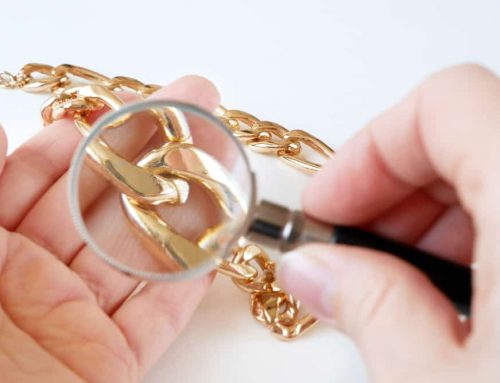
When you come to us, we weigh and test every item in front of you. You see the scale. You see the karat reading. You see how we got from your piece to the number we’re offering. That’s not a sales tactic — it’s just how this should work. There’s no reason a buyer should disappear into a back room with your jewelry and return with a number they won’t explain. If that ever happens to you anywhere, walk out.
For Nassau County residents who are dealing with estate jewelry — pieces inherited from parents or grandparents, often with no documentation — this kind of transparency matters even more. You may not know if the piece is 10K or 18K, or whether it’s solid gold versus gold-filled. We can tell you on the spot, and we’ll explain what that means for the value before we make any offer.
What the Gold Market Is Doing Right Now — and Why It Matters to You
Gold has had a remarkable run. According to the World Gold Council, gold set 53 new all-time price highs during 2025, with the average price in Q3 reaching approximately $3,458 per ounce — about 90% higher than the average of the four quarters before it.
If you’ve been holding onto unwanted gold and waiting for the right moment to sell, it’s worth knowing that by most historical measures, you’re already in it. Prices may continue rising, or they may pull back — nobody knows for certain. But selling at current levels is objectively a strong financial decision.
Gold Price Trend Over 10 Years: Why Long-Term Direction Matters for Sellers
Ten years ago, gold was trading around $1,200 per ounce. Today it’s trading at nearly three times that. That’s not a short-term spike — it reflects a decade-long shift driven by inflation hedging, geopolitical uncertainty, central bank buying, and a weakening dollar. Central banks globally now hold nearly 36,200 tonnes of gold, representing almost 20% of official reserves.
Understanding the gold price historical trend helps sellers put current prices in context. When gold was at $1,200, selling felt like settling. At $3,400+, sellers who’ve been holding inherited or unwanted pieces are in a genuinely strong position — one that didn’t exist five years ago.
The gold cost trend over the past decade also matters for buyers of investment gold. If you’ve purchased gold coins or bullion in the past and are now considering selling, the appreciation over a 5- or 10-year hold has been substantial. Knowing that history helps you make a more informed decision about timing.
For Nassau County homeowners — a community that already faces some of the highest property tax bills in the country — that context is practical, not abstract. Whether you’re covering a tax bill, funding a renovation, or simply clearing out jewelry that hasn’t been worn in years, the current market makes now a reasonable moment to act.
Gold Price Trend Last Week: How Short-Term Moves Affect Your Payout
Gold prices move daily, sometimes significantly. A shift of $50 to $100 per ounce in a single week isn’t unusual during periods of market volatility, and that movement directly affects what you’ll be offered for your gold on any given day.
This is why we use live spot prices when calculating offers — not a fixed internal rate we set once a week. When you come in to sell, the offer reflects what gold is actually trading for that day. If prices have risen since you last checked, your offer will be higher. If they’ve dipped slightly, it will reflect that too. Transparency on this point is a sign of a buyer operating honestly.
Scrap gold prices specifically — meaning the price paid for gold that will be refined and recycled rather than resold as jewelry — track closely to spot price. The gap between what a buyer offers and the spot price represents their margin for testing, processing, and the cost of doing business. A fair buyer keeps that gap reasonable and can explain it clearly.
We’ve been buying gold and precious metals long enough to know that customers who understand the process are the ones who trust the outcome. We’d rather spend two minutes explaining how we got to a number than have you leave wondering whether you made the right call. That’s especially true for first-time sellers, who often come in expecting the worst and leave surprised by how straightforward the process actually is.
Local Gold Buyers in Nassau County: What to Look for Before You Go
The difference between a good experience and a frustrating one usually comes down to one thing: whether the buyer is willing to show their work. Transparent weighing, on-site testing, a clear explanation of the offer, and no pressure to decide on the spot — that’s what a reliable transaction looks like, and it’s the standard you should hold any buyer to before you hand over your jewelry.
Nassau County has no shortage of gold buyers, but not all of them operate the same way. If you’re comparing options, ask each one how they test purity, whether they use live spot prices, and whether they’ll explain the calculation before you commit. The answers will tell you a lot.
We’re located at 1786 E Jericho Turnpike in Huntington — easily accessible from Hicksville, Hempstead, Jericho, Farmingdale, and communities throughout Nassau County. We’ve been voted the Best Pawn Shop on Long Island by the Long Island Press, and we offer cash for gold, silver, luxury watches, and estate jewelry with same-day payment and no credit checks required. If you have questions before you come in, call us. If you’re ready to find out what your pieces are worth, we’ll have an answer for you in about fifteen minutes.