Summary:
Most people selling gold jewelry aren’t experts. They have a broken necklace, a ring they never wear, maybe a few pieces from a relative’s estate — and they want to know what it’s worth. That’s completely reasonable. What’s not reasonable is walking into a transaction that’s already stacked against you.
The gold-buying industry has its share of legitimate, professional operations. It also has buyers who count on sellers being uninformed. Knowing the difference before you walk through the door is the whole game. Here’s what to watch for — and what it looks like when a buyer is actually doing things right.
Places That Buy Gold and Diamonds — and How to Tell Them Apart
Your options for selling gold jewelry fall into a few broad categories: pawn shops, jewelry stores, coin dealers, and online buyers. Each one has a different business model, and that model directly affects what they’ll pay you and how they’ll treat you.
Online buyers are convenient, but you’re shipping your jewelry to a stranger and waiting days for an offer you may not be able to negotiate. Jewelry stores often only buy pieces they can resell intact — if your item is broken or outdated in style, they may pass entirely. Coin dealers are strong on bullion and numismatics but may not specialize in estate jewelry. A well-run pawn shop with a retail jewelry operation can often pay the most, because we’re evaluating your piece for both scrap value and resale potential — not just what it melts down to.
The type of buyer matters. But within any category, what separates a good buyer from a bad one comes down to a handful of observable behaviors.
Top Rated Gold Buyers: What the Rating Actually Reflects
A high star rating tells part of the story. What’s behind it tells the rest. When you read through the reviews of top rated gold buyers, you’ll notice the same themes come up over and over: the seller felt respected, the process was explained clearly, and the offer was fair — sometimes better than expected. That last part matters more than people realize.
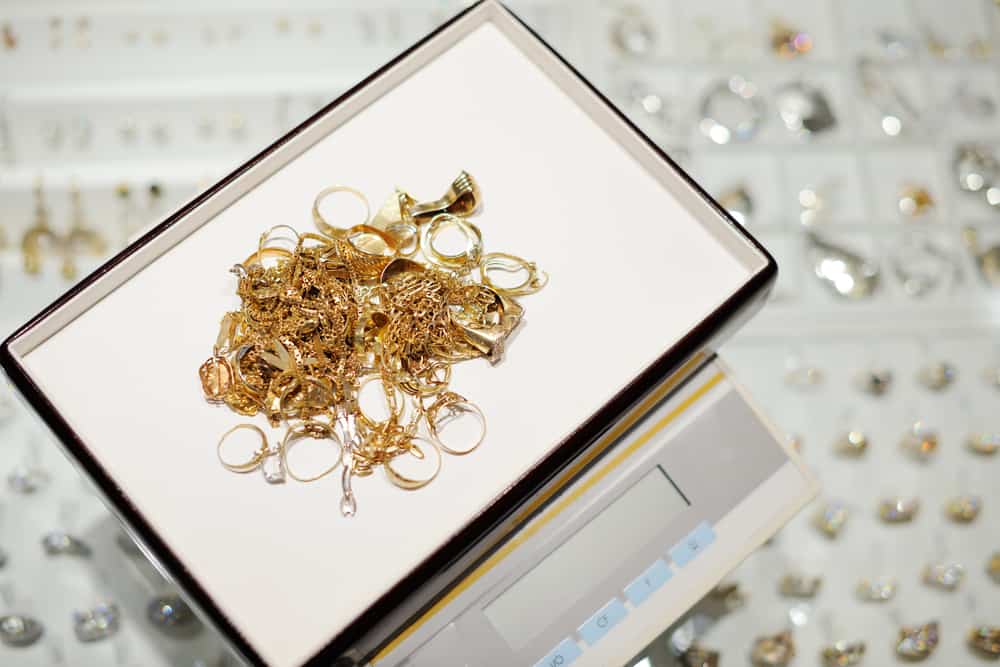
The sellers who walk away satisfied aren’t necessarily the ones who got the highest dollar amount. They’re the ones who understood what they were being offered and why. A buyer who shows you the scale reading, explains the karat test, and walks you through the math — spot price, purity, payout percentage — is a buyer you can evaluate. One who just says “I’ll give you $80 for this” and waits for you to decide is asking you to trust a number with no context behind it.
Reviews also reveal how buyers handle the moments that don’t go perfectly. Does the staff take time to explain why a piece is worth less than the seller hoped? Do they point out when something has resale value beyond its scrap weight? These are the behaviors that build the kind of reputation reflected in a 4.8-star rating across dozens of real transactions — not a polished marketing page.
For Nassau County residents specifically, it’s worth noting that the local market has several active gold buyers across Hicksville, Franklin Square, Garden City, and surrounding towns. Competition is real, which means you have options — but it also means some buyers are competing on volume and speed rather than transparency and fairness. Knowing what a trustworthy process looks like gives you the ability to comparison-shop with confidence, not just go with whoever is closest.
5 Red Flags That Should Make You Walk Out the Door
The first red flag is pressure. Any buyer who creates urgency — “this offer is only good right now,” “I’ve got someone else coming in for this” — is using a tactic, not making a genuine offer. A legitimate buyer will give you time to think. You should always be able to walk away with your jewelry and no obligation.
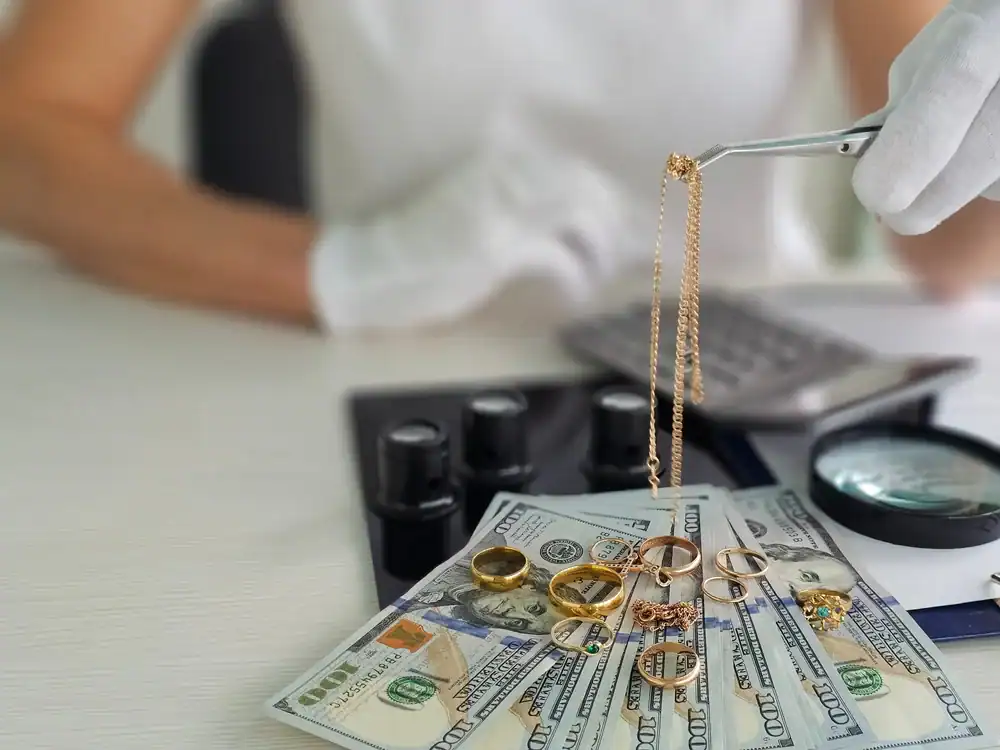
The second is a hidden testing process. If the buyer takes your jewelry to a back room to test it, that’s a problem. Testing should happen in front of you, on a visible scale, with equipment you can watch in real time. You don’t need to understand every detail of an XRF reader or an acid test to know whether the buyer is being transparent about the process.
Third: no visible licensing. New York State requires precious metal dealers and pawnbrokers to be licensed, and those licenses should be on display. A buyer operating without one isn’t just cutting corners — they’re operating outside the law. That’s a meaningful signal about how they’ll treat the rest of the transaction.
Fourth, watch for a buyer who can’t or won’t explain their math. The offer you receive should be traceable: your item’s weight, its karat (and therefore its gold content), the current spot price, and the payout percentage the buyer applies. If any part of that calculation is missing or vague, you have no way to evaluate whether the offer is fair.
The fifth red flag is a significant gap between the offer and market value — with no explanation. Reputable buyers typically pay somewhere between 70 and 85 percent of melt value on scrap gold. An offer that lands well below that range isn’t automatically wrong, but it requires a reason. If the buyer can’t give you one, that’s your answer.
Gold and Silver Buyers Near My Location — What Nassau County Sellers Should Expect
Nassau County has a large and active market for gold and silver buyers, which is good news for sellers. The county’s demographics — high household incomes, significant estate activity, strong cultural traditions of gold jewelry gifting in communities like Hicksville and Westbury — mean there’s a consistent flow of sellers and buyers alike. That competition should work in your favor.
What you should expect from any legitimate local buyer is a straightforward process: you bring in your pieces, we test them in front of you, we explain the offer, and you decide. No drama, no pressure, no guesswork. If the experience feels rushed or opaque at any point, you’re not in the right place.
Questions to Ask Before You Sell Your Gold Jewelry Locally
Walking in with a few direct questions changes the dynamic of the transaction immediately. It signals that you’re an informed seller, and it gives you real information to evaluate the buyer before you commit to anything.
Ask whether we’re licensed. In New York, precious metal dealers are required to hold a license, and a legitimate buyer will tell you without hesitation. Ask how we test gold — and whether the test happens in front of you. Ask what percentage of melt value we pay on scrap, and whether we also evaluate pieces for resale value. That last question is more important than most sellers realize. A buyer who only thinks in terms of scrap weight may offer you significantly less than a buyer who recognizes that your piece has value as jewelry — intact stones, a desirable design, a hallmark that matters to collectors.
Also ask whether we require a government-issued ID. This is actually a good sign, not an inconvenience. New York State law requires ID for precious metal transactions, and a buyer who skips this step is operating outside that requirement. It exists to create a paper trail that protects both parties.
Finally, ask whether you’re obligated to sell after receiving a quote. You’re not — and any reputable buyer will confirm that immediately. The offer should be exactly that: an offer. You can take it, decline it, or take it to one more buyer for comparison. A buyer who makes you feel otherwise is using pressure, and pressure is the first red flag on the list for a reason.
Should You Sell or Pawn? An Option Nassau County Sellers Often Overlook
Most people who walk into a gold buyer have already decided they want to sell. But if the piece has sentimental value — an inherited ring, a gift from a spouse — it’s worth knowing that selling isn’t the only option. A pawn loan lets you use the item as collateral for a short-term cash loan, then reclaim it when you repay. No credit check, no impact on your credit score, and you don’t permanently give up the piece.
This matters more than it might seem. One of the most common regrets sellers express after the fact is wishing they’d known they could get the cash without losing the item forever. For Nassau County residents dealing with a short-term financial gap — a property tax bill, a medical expense, a tuition payment — a collateral loan on a gold piece can be a genuinely smarter move than an outright sale.
The distinction also applies to the broader question of timing. Gold prices in 2024 and into 2025 have reached historic highs, which means the scrap value of your jewelry is as strong as it’s been in years. If you’re selling because the price is right, that’s a sound decision. If you’re selling because you need liquidity right now but might want the piece back later, a pawn loan is worth asking about before you commit to a sale.
We work with Nassau County residents on both sides of this decision regularly — some who know exactly what they want, and some who come in thinking they want to sell and leave with a loan instead. Either way, the goal is the same: you walk away with a fair outcome and a clear understanding of what just happened. That’s what reliable gold buyers actually look like in practice, not just in their marketing.
How to Find a Gold Buyer in Nassau County You Can Actually Trust
The short version: look for licensing, transparent testing, and a buyer who explains the math without being asked. Walk away from pressure, hidden processes, and offers that arrive without context. Those five red flags aren’t rare — but they’re avoidable once you know what to look for.
Nassau County has no shortage of places to sell gold and silver. The difference between a good experience and a frustrating one usually comes down to who you walk in to see. An established buyer with a real track record, verifiable credentials, and a physical location they’ve maintained for years is a different thing entirely from a pop-up operation or an online buyer asking you to ship your jewelry and wait.
If you’re ready to find out what your pieces are worth — or just want a straight answer about your options — we’re open seven days a week and have been serving Long Island sellers for years. Come in, ask your questions, and see what a no-pressure appraisal actually feels like.