Summary:
Most people only think about jewelry valuation when something forces the issue — a divorce, an inheritance, a policy renewal, or a moment where you’re holding a piece and genuinely don’t know what it’s worth. That uncertainty is uncomfortable, especially when you don’t have the background to verify whatever number someone gives you.
This page exists to take the mystery out of the process. We’ll walk you through what a professional valuation actually involves, why different types of appraisals produce different numbers, and what separates a shop that knows what it’s doing from one that doesn’t. If you’re in Nassau County and trying to figure out your next step, keep reading.
How Professional Jewelry Valuation Actually Works
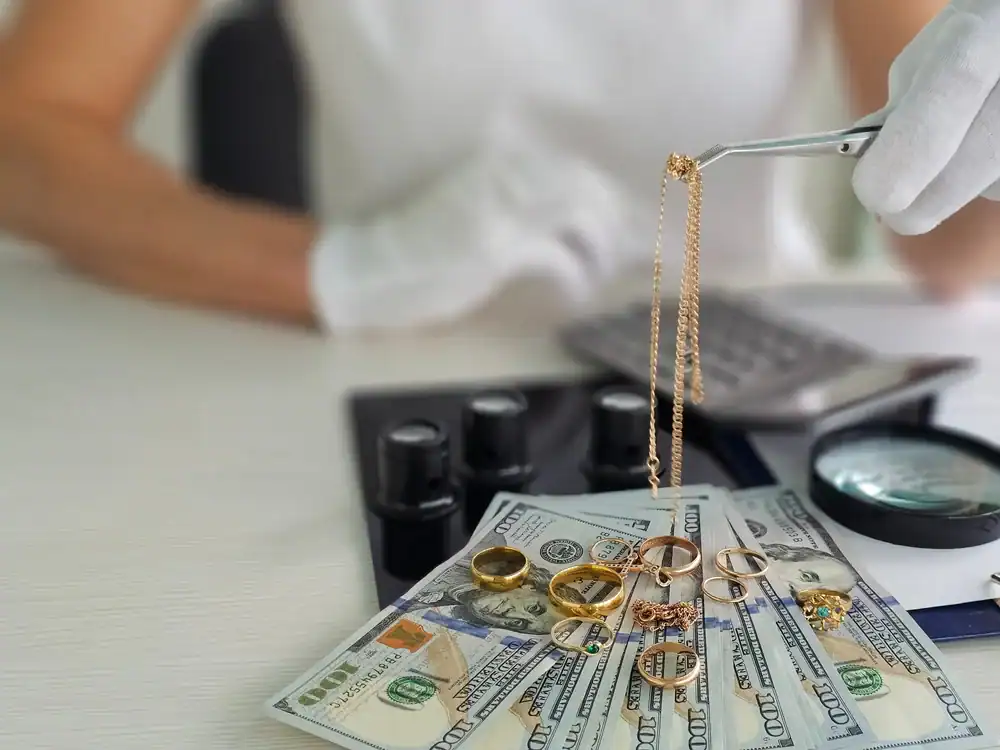
A real jewelry valuation isn’t a gut feeling or a quick glance under a light. It’s a structured process that starts with physical examination and ends with a documented assessment you can actually use — whether that’s for insurance, an estate, or deciding whether to sell.
We begin by looking at the piece as a whole: overall condition, signs of wear, evidence of prior repairs, and the quality of craftsmanship. From there, the process gets more technical. Metals are tested to confirm purity — not assumed based on a stamp. Gemstones are identified, graded, and in many cases measured to calculate weight by formula when they’re set and can’t be removed. Every step gets documented.
What you should walk away with is a clear explanation of what you have, what condition it’s in, and how the final number was reached. If an appraiser can’t or won’t explain their process, that’s worth paying attention to.
What Testing Methods Tell You That a Visual Inspection Can't
The visual inspection is where the process starts, but it’s the testing that actually confirms what you have. Gold stamps and hallmarks can be misleading — plating wears, marks get altered, and not every piece was stamped accurately to begin with. Professional testing removes the guesswork.
For precious metals, the two most reliable methods are acid testing and XRF (X-ray fluorescence) analysis. Acid testing uses a small sample from the piece to chemically confirm karat content. XRF analysis is non-destructive — it reads the elemental composition of the metal without touching the surface. For customers bringing in 22-karat or 24-karat gold pieces, which are common in many Nassau County households, accurate purity testing makes a significant difference in the final number.
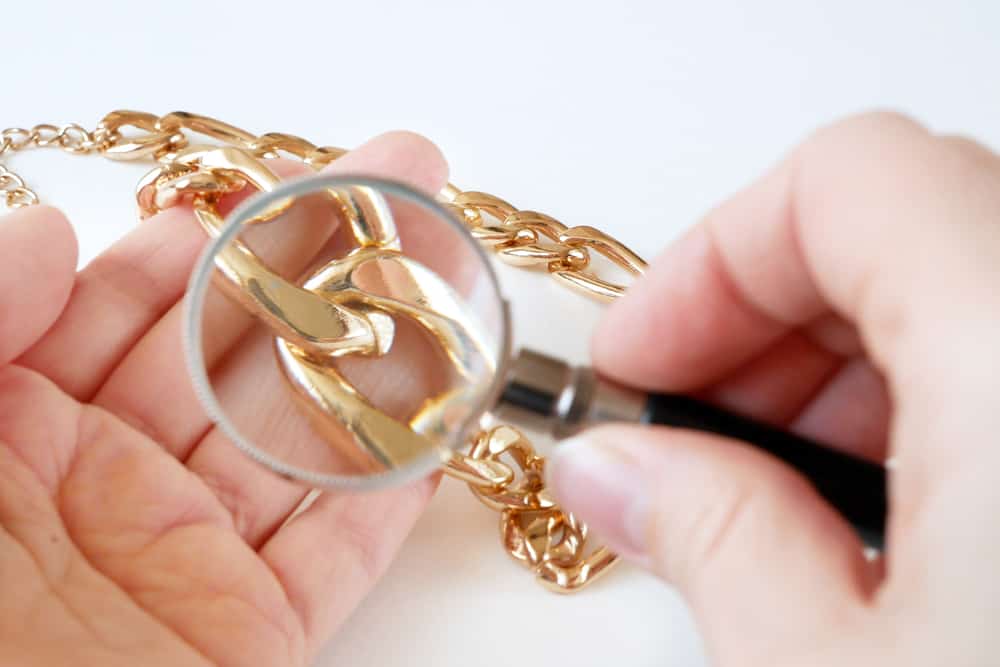
Gemstone testing follows a different path. A trained appraiser uses a diamond tester to distinguish natural diamonds from simulants, and a loupe — typically 10x magnification — to examine clarity characteristics, inclusions, and the quality of the cut. For colored stones, identification can require additional tools, because the difference between a natural sapphire and a synthetic one isn’t visible to the naked eye, and it absolutely affects value.
For luxury watches, the process shifts again. A Rolex or Breitling isn’t evaluated the same way a gold bracelet is. Reference numbers and serial numbers are cross-checked against production records. The movement is assessed for condition and service history. Original papers and box significantly affect resale value — sometimes by thousands of dollars. This is a specialty skill set, and not every shop has it.
The point of all this is that a thorough valuation takes time and equipment. If someone quotes you a number in under five minutes without explaining how they got there, you don’t actually have a valuation — you have a guess.
Insurance Appraisal vs. Resale Value vs. Pawn Loan Evaluation — Why the Numbers Don't Match
This is the part that trips most people up. You get a jewelry appraisal for insurance purposes and it says $8,000. You bring the same piece to a buyer and they offer you $2,500. That gap feels wrong, but it isn’t — the two numbers are measuring completely different things.
An insurance replacement appraisal is designed to answer one question: what would it cost to replace this piece at retail if it were lost or stolen? That number is intentionally on the higher end because insurance companies pay out based on replacement cost, not what the jewelry would fetch on the open market. It reflects retail pricing, current metal spot prices, and the cost of recreating the piece from scratch.
Fair market value is a different standard entirely. It’s the price a willing buyer and a willing seller would agree on — neither under pressure, both reasonably informed. This is the number that matters in estate settlements and divorce proceedings, and it’s typically well below the insurance figure.
A pawn loan evaluation operates on yet another standard: liquidation value. We need to know what we could realistically recover if the loan isn’t repaid and the item needs to be sold. That produces a more conservative number, which is why pawn loan offers are lower than fair market value — not because we’re being dishonest, but because the math requires a cushion.
Understanding which type of valuation you’re getting — and why — is the difference between feeling cheated and feeling informed. We explain this clearly at the start of every evaluation, because a customer who understands the process is a customer who can actually make a good decision.
Jewelry Authentication: How Professionals Verify What You Actually Have
Valuation and authentication aren’t the same thing, but they’re closely connected. Before anyone can tell you what a piece is worth, they need to confirm what it actually is. That’s especially true for estate jewelry, vintage pieces, and anything with a brand name attached to it.
Authentication covers a range of questions: Is this metal what the stamp says it is? Are these stones natural or synthetic? Is this watch genuinely what the dial says, or has it been altered? The answers change the value — sometimes dramatically. A piece that authenticates as a signed designer item can be worth multiples of its melt value. A watch with a replaced dial or non-original movement loses significant collector value even if it looks identical to an untouched example.
How to Tell If Jewelry Is Real — What Professionals Look For
Hallmarks are the starting point. In the United States, gold jewelry is typically stamped with a karat mark — 10K, 14K, 18K — and often a maker’s mark. Sterling silver carries a 925 stamp. Platinum is usually marked 950 or PT950. These marks tell you what the piece is supposed to be, but they don’t guarantee it. Stamps can be applied to plated pieces, and older jewelry sometimes carries no marks at all, particularly estate pieces from Europe where hallmarking conventions differ.
Beyond the stamp, metal testing confirms what the stamp claims. For gold, acid testing or XRF analysis verifies karat content directly. For silver, similar methods apply. For platinum, which looks similar to white gold and palladium, testing is the only reliable way to tell them apart — and the difference matters, because platinum is significantly more valuable.
Gemstone authentication requires a different toolkit. Diamond testers distinguish real diamonds from cubic zirconia and moissanite based on thermal or electrical conductivity. A trained gemologist using a loupe can identify natural inclusions that indicate a stone grew in the earth rather than in a lab. For colored stones — rubies, sapphires, emeralds — spectroscopic analysis can distinguish natural from synthetic and identify treatments like heat enhancement or fracture filling, both of which affect value.
Brand authentication for luxury watches involves cross-referencing serial numbers with manufacturer records, inspecting the movement for originality, and checking for signs of refinishing or replacement parts. A genuine Rolex with original components and documentation is worth considerably more than one that’s been polished, re-dialed, or fitted with aftermarket parts — even if both look identical in a photograph.
The takeaway is that authentication isn’t a formality. It’s the foundation that the valuation number sits on. Get the identification wrong and everything that follows is built on a guess.
Red Flags to Watch For When Getting Jewelry Valued in Nassau County
Nassau County has no shortage of places willing to take a look at your jewelry and give you a number. Not all of them are doing it the same way, and some of the differences matter more than others.
The clearest red flag is a fee structure based on a percentage of the appraised value. The Appraisers Association of America is explicit on this: a legitimate appraiser charges by the hour, by the piece, or by the project — never as a cut of the value they assign. A percentage-based fee creates an obvious incentive to inflate the appraisal, which serves the appraiser’s income but not your actual interests.
A second warning sign is an appraiser who won’t explain their testing methods or show you the equipment they’re using. This isn’t about demanding a technical lecture — it’s about basic transparency. If someone is quoting you a number for a piece you care about, you’re entitled to know how they arrived at it. Vague answers or deflection should make you cautious.
Lack of written documentation is another issue. A verbal quote is not a valuation. A professional assessment produces a written report that includes the appraiser’s credentials, a description of the item, the testing performed, and the value conclusion with the basis for it. If you’re leaving without something on paper, you don’t have much to stand on — whether you’re submitting an insurance claim, presenting evidence in a legal proceeding, or simply comparing offers.
Finally, unlicensed operators are a real concern. New York State requires pawnbrokers to be licensed under Article 5 of the General Business Law, and Nassau County has its own local licensing requirements on top of that. Asking to see a license isn’t rude — it’s reasonable. A legitimate shop will have no issue with the question. We operate as a fully licensed pawnbroker and jewelry dealer in New York State, and we’re happy to answer any questions about our credentials before you hand over anything.
Getting a Fair Jewelry Valuation Near Nassau County — What to Do Next
If you’ve made it this far, you’re already in a better position than most people who walk into a jewelry evaluation. You know what the process should look like, you know the difference between an insurance appraisal and a resale value, and you know what to watch for if something feels off.
The short version: a good valuation is transparent, documented, and explained to you in plain language. The number should make sense given what you brought in, and the person giving it to you should be willing to show their work.
We’re open seven days a week — including Sundays — which matters if you’re working around a regular schedule or trying to sort through an estate without taking time off. There’s no obligation to sell or pawn anything; plenty of people come in just to understand what they have. If you’re in Nassau County and looking for a straight answer from someone who actually knows what they’re looking at, Gold Coast Jewelry & Pawn is worth the drive up E Jericho Turnpike.
—
**Frequently Asked Questions**
**Can I get my jewelry valued without committing to sell it?** Yes, and this is one of the most common misconceptions we run into. You can walk in, have your piece evaluated, get a clear explanation of what it’s worth and why, and leave with that information — no transaction required. A lot of Nassau County residents come in simply to understand what they inherited or what their collection is worth before making any decisions. That’s a completely valid reason to visit, and there’s no pressure attached to it.
**How is a pawn loan evaluation different from a formal appraisal?** A formal appraisal — particularly for insurance purposes — reflects what it would cost to replace a piece at retail. A pawn loan evaluation is based on what we can realistically recover if the loan goes unpaid and the item needs to be sold. Those are two different questions with two different answers, and the gap between them isn’t dishonesty — it’s the difference in what’s being measured. We explain this clearly before any evaluation so you’re not surprised by the number.
**Do you evaluate luxury watches as well as jewelry?** Yes. Watch valuation is a distinct specialty, and we treat it that way. Reference numbers, serial numbers, movement condition, service history, and the presence of original papers and box all factor into a watch’s value — sometimes significantly. We’re a Rolex specialist and an Authorized Ball Watch Dealer, which means our team has the background to assess luxury watches properly, not just weigh them.
**How do I know if my gold jewelry is the karat it says it is?** The stamp is a starting point, not a guarantee. We test all metals directly using methods that confirm actual purity. For Nassau County residents bringing in high-karat pieces like 22K or 24K gold — which are common in many Long Island households — accurate purity testing makes a significant difference in the final valuation. The tested purity is what drives the value, not the stamp alone.