Summary:
Most people have more gold sitting around than they realize. A broken necklace in the back of a jewelry box. A single earring without a match. Rings from a marriage that ended years ago. Dental crowns. Old coins. None of it is doing anything useful — but all of it has real value, especially right now.
Gold prices reached record highs in 2025, setting 53 new all-time highs throughout the year. If you’ve been holding onto pieces you never wear, you’re sitting on an opportunity that hasn’t existed in decades. The question isn’t whether to sell — it’s how to make sure you actually get what your gold is worth.
How to Sell Scrap Gold for Maximum Cash Value
The single biggest mistake sellers make is walking in without any context. You don’t need to be an expert, but understanding a few basics puts you in a much stronger position. Gold is valued by two things: weight and purity. That’s it. Condition doesn’t matter. Whether a piece is broken, tarnished, or missing a stone, the gold content is what drives the number.
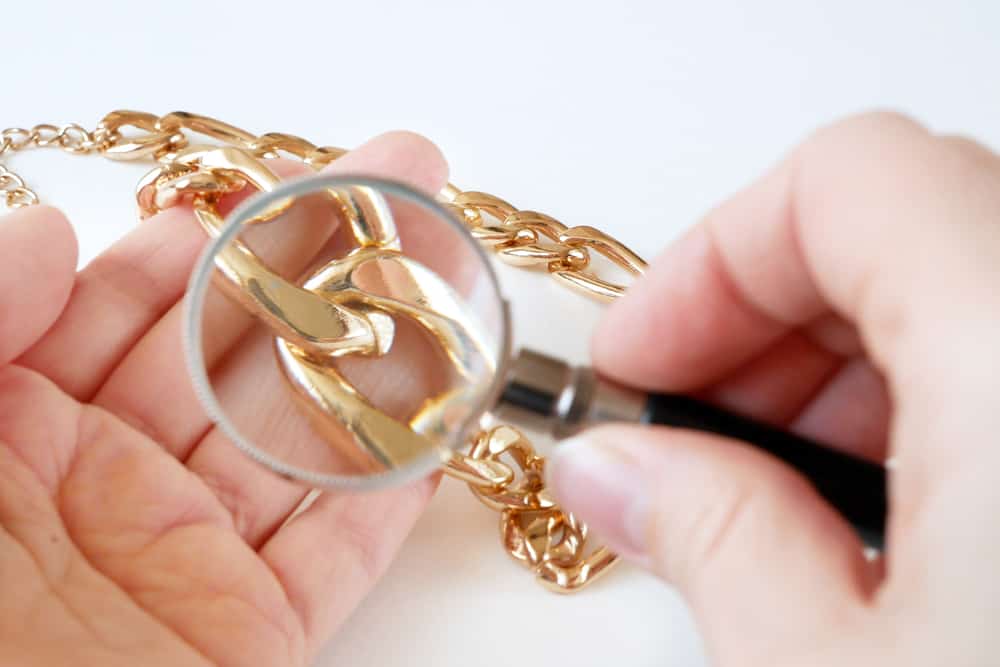
Before you visit any buyer, take a few minutes to sort your items by karat if you can. Look for stamps on the inside of rings or the clasp of a chain — you’ll typically see markings like 10K, 14K, 18K, or 24K. Higher karat means more gold per gram, which means a higher payout. If you’re not sure what you have, that’s completely fine — a professional appraisal will sort it out quickly.
One thing worth knowing: don’t clean your gold with chemicals before bringing it in. It won’t increase the offer and could actually damage certain pieces. Just bring it as-is.
What Types of Gold Items Can You Actually Sell as Scrap?
This is one of the most common questions we hear, and the answer is broader than most people expect. Scrap gold refers to any gold item that’s no longer wanted or usable in its current form — but still holds value because of its gold content. That covers a lot of ground.
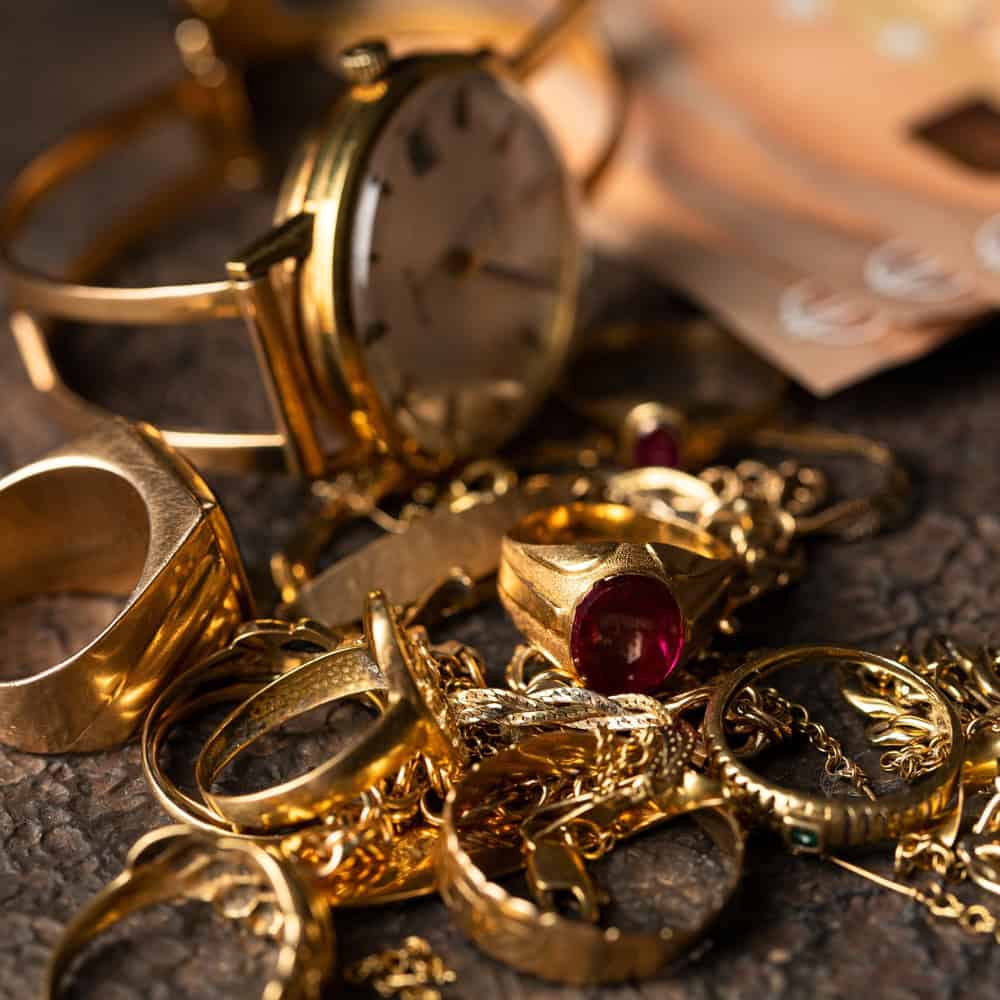
Broken jewelry is the obvious category — chains with snapped clasps, rings with missing stones, bent or crushed pieces that a jeweler won’t repair. But it also includes items people don’t typically think of as sellable: dental gold crowns and bridges, gold coins and bullion, mismatched earrings, outdated styles you’d never wear again, and inherited pieces that carry more emotional weight than practical use.
Estate gold is particularly common among Nassau County residents. Communities like Great Neck, Manhasset, Roslyn, and Garden City have large populations of long-term homeowners — and adult children sorting through a parent’s estate often find decades’ worth of accumulated jewelry, coins, and keepsakes. A single 18K necklace from a 1970s estate can be worth several hundred dollars at today’s prices. A collection of mixed pieces can be worth considerably more.
The point is: don’t pre-screen yourself out. If it’s gold, it has value. Bring it in, get it tested, and let the number speak for itself. You’re not committed to selling anything until you decide you want to.
One thing that surprises a lot of first-time sellers is how little documentation matters. You don’t need the original receipt, a prior appraisal, or a box. Gold is gold — the weight and purity tell the whole story.
Is Now Actually a Good Time to Sell Scrap Gold in Nassau County?
The short answer is yes — and the data backs it up. The average annual gold price in 2025 reached $3,431 per troy ounce, up 44% from the previous year. That’s the highest annual average on record. What we’re seeing isn’t a brief spike — it’s a sustained run that has created a genuine window for sellers.
Nassau County residents are particularly well-positioned. The area has a high concentration of fine jewelry ownership, with many households holding 18K, 22K, or 24K pieces accumulated over generations. Higher-karat gold pays out more per gram, which means the same weight of gold from a Great Neck estate is worth meaningfully more than the same weight of 10K fashion jewelry from a mall chain.
There’s also a practical financial dimension that’s specific to this area. Nassau County carries some of the highest property taxes in the country. Even in affluent households, the pressure around tax season, unexpected expenses, or estate settlements is real. Liquidating gold you’re not using is a straightforward way to generate cash without taking on debt or touching your credit.
Some sellers hesitate, wondering if prices will climb even higher. That’s a reasonable question, and the honest answer is: no one knows. Professional investors can’t reliably time the gold market. What we do know is that gold is already at generational highs, and selling now means converting unused assets into real money at the best prices most Long Islanders have ever seen. Waiting for “even better” prices is a gamble on an already-favorable outcome.
Finding Reliable Local Gold Buyers in Nassau County, NY
Nassau County has no shortage of gold buyers — from national mail-in services to local shops across the county. The range in quality is just as wide as the range in offers. Choosing the right buyer isn’t just about getting the highest number; it’s about being confident that the number is accurate, the process is transparent, and you’re dealing with someone who’s accountable.
Mail-in services are convenient on the surface, but they remove every protection you have as a seller. You can’t watch the testing. You can’t negotiate. You can’t walk away from an offer you don’t like — at least not without a delay and a fight. A local buyer who tests your gold in front of you and explains every step of the calculation is a fundamentally different experience.
What to Look for in a Reputable Scrap Gold Buyer
Licensing is the baseline. In New York State, pawnbrokers must be licensed under Article 5 of the General Business Law, and we’re required to maintain detailed transaction records and report purchases to local law enforcement. That accountability matters. A licensed, regulated buyer can’t simply disappear, and the oversight creates a paper trail that protects both parties.
Beyond licensing, look for buyers who test gold in front of you and explain what they’re doing. We show our customers the scale, explain the karat reading, and walk through the math before making an offer. If a buyer hesitates to explain their process, that’s a signal worth paying attention to.
Longevity and reviews are your next filter. A business that has been operating in a tight-knit suburban community like Nassau County for years — and has accumulated specific, named, repeat-customer reviews — has earned that reputation through consistent fair dealing. Word travels fast in communities like Syosset, Glen Cove, and Woodbury. Shops that lowball sellers don’t last.
We’ve been serving Nassau and Suffolk County residents for years, and we’ve been voted the Best Pawn Shop on Long Island by the Long Island Press — an editorial recognition from the publication Long Islanders actually read. That’s not something you can buy or manufacture. It reflects what customers have experienced when they walk through the door.
One thing that sets us apart from a typical gold buyer: we operate both retail and wholesale channels. That flexibility means we don’t need to build in as large a margin on every purchase, which lets us offer more competitive buy prices. It’s a practical advantage that shows up directly in the offer you receive.
Gold Appraisal in Nassau County: What Happens When You Walk In
The appraisal process is where a lot of sellers feel the most anxious — usually because they don’t know what to expect. Here’s exactly what happens when you bring scrap gold to us.
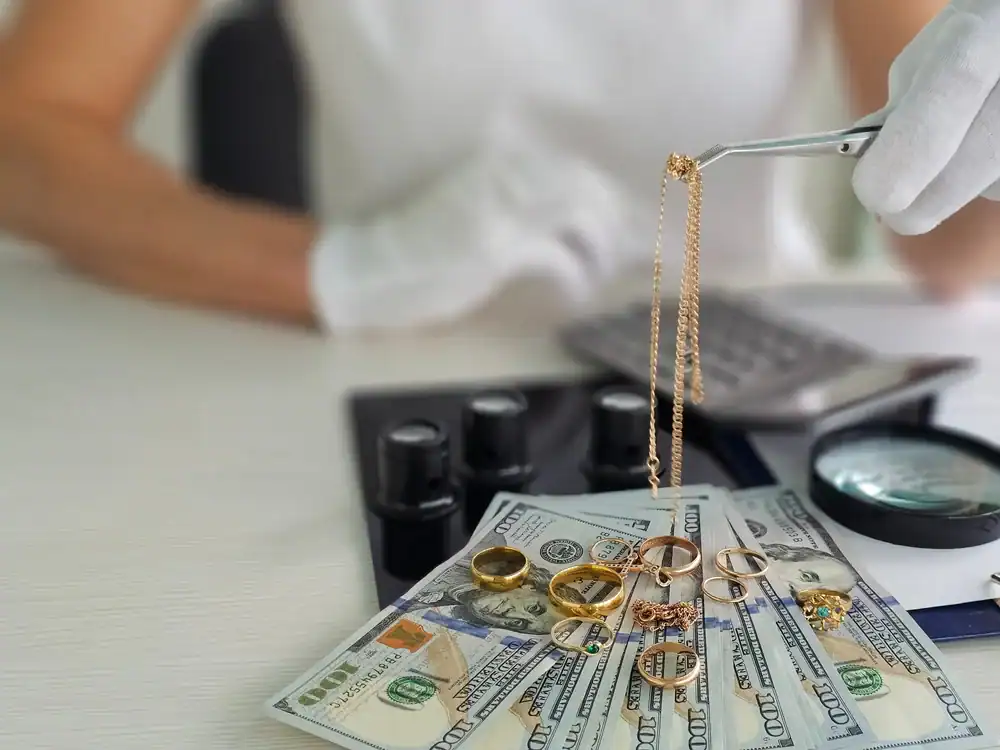
You walk in. No appointment needed. Your items are weighed on a calibrated scale in front of you. Then we test purity using professional methods — most commonly XRF (X-ray fluorescence) testing, which is accurate to within a fraction of a percent and requires no damage to the piece. You watch the entire process. Nothing leaves your sight.
Once we have the weight and purity, we apply the current spot price and calculate the melt value — the intrinsic gold value of the metal itself. We then make an offer based on that number. Reputable buyers typically pay between 75% and 99% of melt value for scrap gold, depending on the type and quantity. The gap between spot price and your offer reflects real costs: refining, testing, overhead, and market risk. Any honest buyer will explain this openly, and we do.
You’re not obligated to accept. You can take the offer, ask questions, compare it to another quote, or simply walk away. There’s no pressure and no hard sell. If you decide to sell, you walk out with cash — often in as little as 15 minutes from the time you arrived.
We’re also Rolex specialists and an Authorized Ball Watch Dealer, which means our appraisal expertise runs deep. A shop that accurately values a $10,000 Rolex has the tools and market knowledge to accurately value your grandmother’s 18K necklace. Those aren’t separate skills — they come from the same foundation.
If you’re not ready to sell permanently, there’s another option worth knowing about: a collateral loan. You bring in your gold, we appraise it, and you receive up to 70% of its value as an instant cash loan — no credit check required. If your situation changes, you can buy it back. It’s a two-way door that most cash-for-gold buyers simply can’t offer.
Ready to Sell Scrap Gold? Here's What Nassau County Sellers Should Know
Gold is at record highs, the process is simpler than most people expect, and the cash you walk out with is real. If you’ve been sitting on broken jewelry, inherited pieces, old coins, or anything gold you no longer use, the math has rarely been more in your favor.
The most important thing is choosing a buyer you can trust — someone who tests your gold in front of you, explains the offer clearly, and gives you the freedom to walk away if it doesn’t feel right. That’s the experience we’ve built, and it’s why Nassau County residents from Manhasset to Syosset to Glen Cove keep coming back.
When you’re ready to find out what your gold is actually worth, we’re here to help.