
Summary:
You’ve got something valuable — jewelry, a watch, maybe some gold you’ve been holding onto — and you need to figure out your next move. Do you sell it outright and walk away with cash? Or do you pawn it, keep your options open, and get the money back to you later?
It’s a question we hear constantly from Nassau County residents, and the honest answer is: it depends. Not on some vague set of circumstances, but on a few very specific things about your situation. By the end of this page, you’ll know exactly which option makes more sense for you — and what to expect when you walk in.
Pawn vs Sell: Understanding What Each Option Actually Means
These two options sound similar but work very differently. When you sell, the transaction is final. You hand over the item, we pay you cash, and that’s the end of it. Simple, clean, and immediate.
Pawning is a collateral loan. You bring in your item, we assess its value, and we issue you a short-term cash loan with your item held as security. You keep the right to reclaim it — pay back the loan plus interest within the loan term, and your item comes back to you. If you don’t repay, the item stays with us and the matter is closed. No debt collection. No hit to your credit score. No further obligation.
How Much Will You Actually Get — Pawning vs Selling?
This is where most people have the wrong expectations going in, and it’s worth being direct about.
When you sell, you’re getting the secondary market value of your item — what it can realistically be resold for, not what it cost new or what an insurance appraisal says it’s worth. Insurance appraisals reflect replacement cost at retail, which is typically two to three times higher than actual resale value. If your diamond ring has a $4,000 insurance appraisal, a fair secondary market offer might be $1,200 to $1,800 depending on the stone, the setting, and current demand. That’s not a lowball — that’s the market.
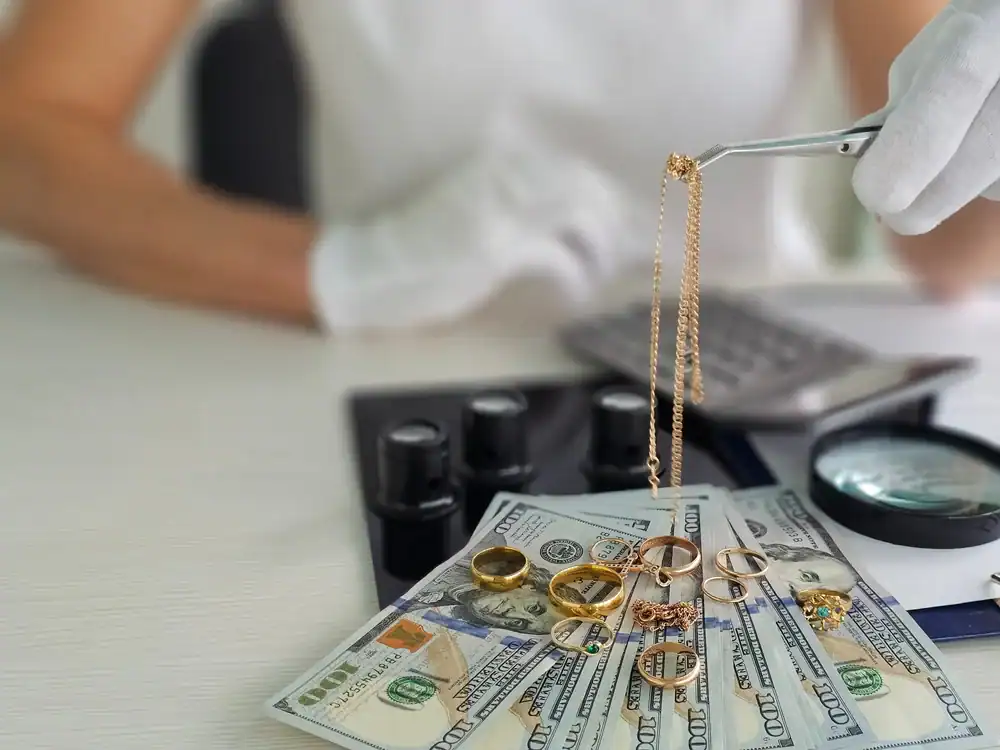
When you pawn, you’re borrowing against that same resale value. Most pawn shops offer somewhere between 20% and 40% of resale value as a loan. We offer up to 70%. On a Rolex with a $10,000 resale value, that’s the difference between a $2,500 loan somewhere else and a $7,000 loan from us. That gap is real, and it matters when you’re deciding whether pawning is even worth it.
Gold prices are at historically strong levels right now. In 2025, gold has been trading above $3,500 per ounce — near all-time highs — which means gold jewelry, coins, and precious metals are fetching significantly more than they were just two or three years ago. A 14K gold ring that might have yielded a $120 loan in 2023 could bring $160 to $180 today. If you’ve been sitting on gold and wondering whether the timing is right, the honest answer is that the timing is about as good as it gets.
Under New York State law, pawn loan interest is capped at 4% per month. On a $1,000 loan, that’s $40 per month — and your standard loan term in New York is 120 days, with extensions available if you need more time. Compare that to a credit card cash advance running 25–30% APR, or a payday loan in some states charging 300% or more. For a short-term cash need, a pawn loan is one of the more affordable borrowing options available to you.
What Happens If You Can't Pay Back a Pawn Loan?
This is the fear that stops a lot of people from pawning when it would actually be the smarter move. So let’s clear it up.
If you can’t repay the loan, you don’t owe anything beyond the item itself. We keep the collateral, the loan is considered satisfied, and the matter ends there. There’s no bill sent to collections. No legal action. No mark on your credit report. Pawn loans aren’t reported to credit bureaus at all — whether you repay or not. That’s a structural feature of how collateral loans work, not a loophole.
What this means practically is that pawning is a lower-risk option than most people assume. The worst-case scenario is that you lose the item — which is the same outcome as selling, just delayed. The best-case scenario is that you get the cash you need now, keep your item, and pay it back when you’re in a better position. If you have a clear expectation of income coming in — a tax refund, a paycheck, a settlement — and you want to keep what you’re bringing in, pawning is often the more sensible call.
Where selling makes more sense is when you genuinely don’t need the item back, or when the ongoing interest cost of a loan doesn’t make financial sense relative to the loan amount. If you’re holding onto a gold chain you haven’t worn in a decade and have no attachment to, selling it outright is cleaner and puts more cash in your hand immediately. There’s no single right answer — it really does come down to your situation.
One thing worth knowing: roughly 40% of pawn customers end up renewing or rolling over their loans rather than repaying them on the original timeline. That’s not a problem, but it does mean the total cost of borrowing can add up over time. If you’re not confident about your ability to repay within the loan term, selling is the more straightforward financial decision.
When Pawning Makes Sense for Nassau County Residents
Nassau County is one of the most expensive places to live in the country. Property taxes alone rank among the highest in the nation, and the cost of everything from housing to groceries reflects it. Even households with solid incomes can hit unexpected cash needs — a medical bill, a home repair, a gap between invoices if you run a business. That’s not a sign of financial trouble. It’s just life in a high-cost market.
What makes pawning particularly useful here is that Nassau County residents tend to own high-value items. Rolex watches, diamond jewelry, gold collections,estate pieces inherited from family members who built their lives in places like Garden City, Manhasset, or Roslyn — these are common in this market. That means the loan amounts available through pawning are meaningful, not nominal.
Should You Pawn or Sell a Rolex in Nassau County?
Luxury watches deserve their own conversation because the stakes are higher and the market is more nuanced than most people realize.
A Rolex isn’t just a watch — it’s one of the few consumer goods that holds and sometimes appreciates in value over time. The secondary market for Rolex is deep and active, which means a reputable buyer with genuine expertise can offer you a fair price based on real demand, not a guess. The problem is that most pawn shops don’t have that expertise. They’ll offer you a fraction of what the watch is actually worth because they don’t know the difference between a Submariner reference that commands a premium and one that doesn’t, or because they’re not confident they can move it at the right price.
We specialize in luxury watches. Pre-owned Rolex watches start at $2,995 in our showroom, and we’re an authorized Ball Watch dealer — which tells you something about the level of market knowledge we bring to every evaluation. When you bring a Rolex to us, it’s assessed by someone who actually understands what it’s worth in today’s secondary market, not someone making a conservative guess to protect themselves.
If you want to keep the watch — maybe it was a gift, maybe it’s tied to something meaningful, maybe you just want the option to get it back — pawning it with us makes sense. You get a loan based on a real, expert valuation rather than an artificially deflated one. If you’re ready to part with it, selling it to us means a fair offer and immediate cash without the weeks of waiting and uncertainty that come with listing it privately. Finding a private buyer who can authenticate a Rolex, knows what it’s worth, and will actually show up with cash is harder than it sounds — and riskier.
What About Inherited Jewelry and Estate Items From Long Island Families?
This is a situation we see regularly in Nassau County, and it’s one of the more emotionally complicated ones. Long Island has established families — communities along the North Shore and South Shore that have been here since the postwar boom — and with that comes a significant volume of inherited jewelry, vintage watches, and precious metals that have been sitting in jewelry boxes for decades.
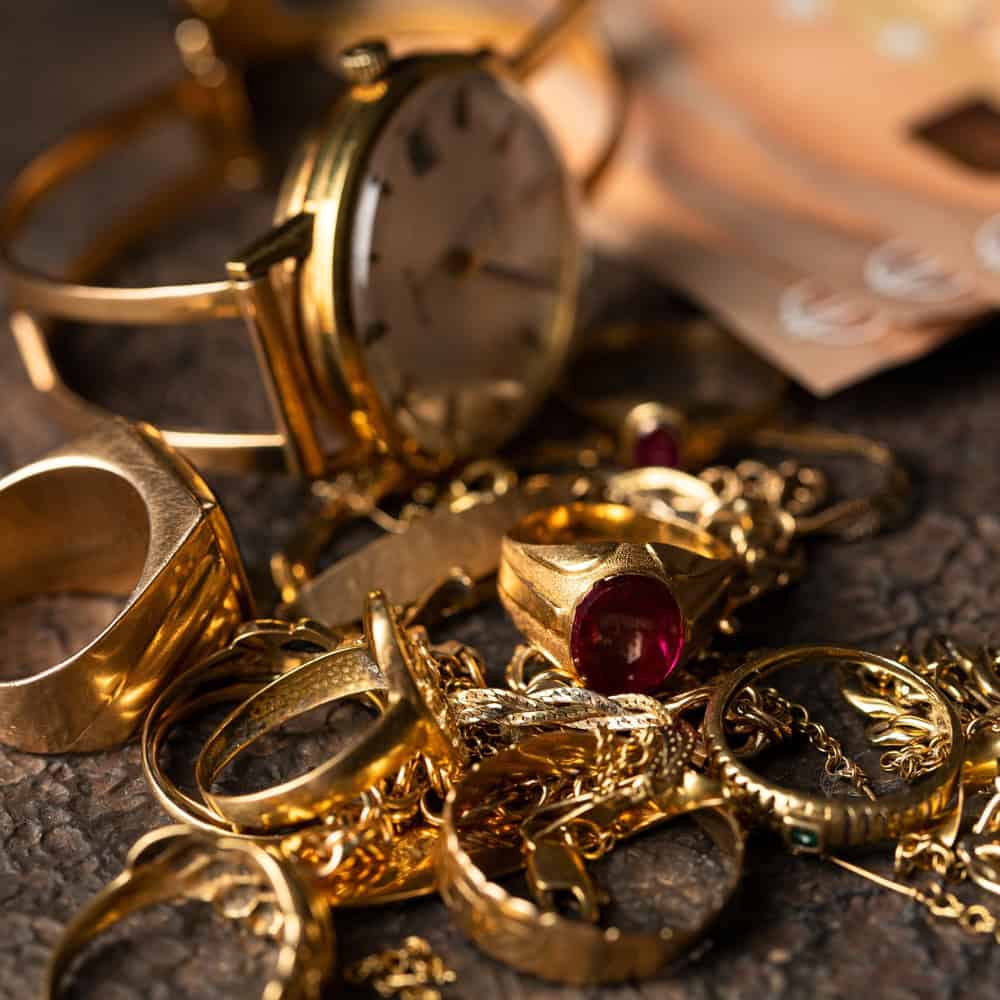
The items themselves are often genuinely valuable. A grandmother’s diamond ring from the 1950s, a grandfather’s gold cufflinks, a vintage watch that’s been in a drawer since the 1980s — these things have real market value, and in many cases their owners have no idea what that value is. An insurance appraisal from years ago doesn’t reflect today’s market. A sentimental attachment to the piece doesn’t translate directly to cash value. And the decision about what to do with inherited items often carries emotional weight that makes clear thinking harder.
Our approach is straightforward: we’ll tell you exactly what something is worth in today’s secondary market, explain how we arrived at that number, and let you decide what you want to do with it. There’s no pressure to transact. If you want to pawn a piece to access cash while you figure out whether you want to keep it long-term, that’s a legitimate option. If you’re ready to sell and move on, we’ll make a fair offer on the spot. If the item turns out to be worth less than you expected, we’ll tell you why — because understanding the difference between insurance value and resale value is genuinely useful information, regardless of whether you sell to us.
The one thing we’d say about inherited items specifically: if gold prices are part of your calculation, right now is a historically strong moment to act. Gold above $3,500 per ounce means pieces that have been sitting untouched for years are worth more today than they’ve ever been. That window doesn’t stay open indefinitely.
How to Choose Between Pawning and Selling — and Where to Start in Nassau County
The short version: pawn if you want the item back and have a realistic plan to repay. Sell if you’re ready to part with it and want the most cash up front. Either way, the quality of the offer you receive depends entirely on the expertise of whoever is evaluating your item.
That’s where we come in. Gold Coast Jewelry & Pawn has been serving Nassau and Suffolk County residents for years, voted the Best Pawn Shop on Long Island by the Long Island Press — not a self-appointed title, but one given by the readers who live here. We buy, sell, and issue collateral loans on gold, diamonds, fine jewelry, Rolex and other luxury watches, coins, and more.
Bring your item in. We’ll give you a no-obligation appraisal, walk you through both options, and let you decide. No pressure, no runaround. Just a straight answer from people who actually know what they’re looking at.