Summary:
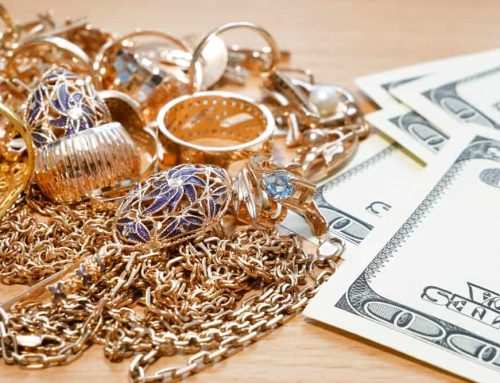
If you’ve got gold jewelry you haven’t worn in years — an old engagement ring a chain from a past relationship, pieces you inherited and never quite knew what to do with — you’re not alone. Plenty of Suffolk County residents are sitting on real value without realizing it. And with gold prices at levels that would have seemed unbelievable just a few years ago, right now is genuinely one of the better times in recent memory to do something about it. This guide breaks down exactly how the process works, what a fair offer looks like, and what to look for when choosing who to sell to on Long Island.
What Gold Buyers in Suffolk County Actually Pay — and How They Calculate It
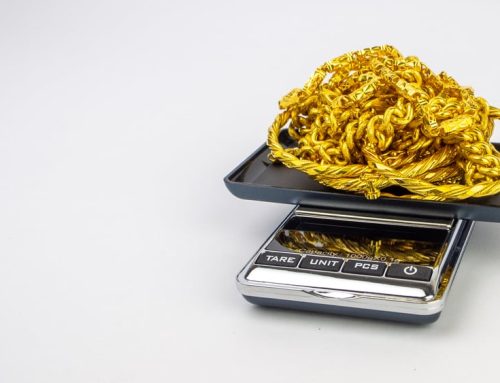
The offer you receive at any gold buying shop comes down to three things: how much your piece weighs, what karat it is, and what the current spot price of gold is on that day. A reputable buyer will walk you through all three — you shouldn’t have to guess or take their word for it. The math is straightforward once you see it.
What varies is the percentage of that melt value a buyer is willing to offer. According to the American Society of Appraisers, a trustworthy buyer should pay somewhere between 65 and 88 percent of your gold’s actual value. Some operations — particularly less reputable ones — pay as little as 20 to 45 percent. That gap is significant, and it’s exactly why who you sell to matters as much as when you sell.
How Karat Purity Affects What Your Gold Is Worth
Not all gold is the same, and the karat stamp on your jewelry tells you how much actual gold is in the piece. Pure gold is 24 karats — that’s 99.9% gold. Most jewelry you’ll come across is 10K, 14K, or 18K, which means 41.7%, 58.3%, or 75% gold content respectively. The rest is other metals mixed in for durability.
When you bring a piece in, a reputable buyer will test it — either through acid testing or an electronic tester — to confirm the karat, regardless of what the stamp says. You don’t need to know this in advance. But understanding it helps you follow the offer calculation in real time and ask the right questions if something doesn’t add up.
Here’s where a lot of sellers get tripped up: they compare the offer they receive to what they paid for the piece, or what a jeweler told them it was “worth” at retail. Those numbers aren’t the same thing. Retail value includes design, labor, markup, and brand. We’re paying for the metal itself — the melt value. That’s not a trick or a lowball move; it’s just how the market works. Knowing that going in prevents a lot of frustration and helps you evaluate offers accurately.
One more thing worth knowing: broken jewelry, mismatched earrings, and pieces with missing stones still have gold content and still have value. Don’t leave anything at home because it looks too damaged to bother with. Bring it all — we’ll evaluate everything.
Why Selling Gold Right Now Makes Financial Sense for Long Island Residents
Gold set 40 new all-time price records in 2024 alone. The annual average that year hit $2,386 per troy ounce — a 23% jump from the year before. In 2025, gold crossed $4,000 per ounce for the first time in history. By early 2026, intraday prices reached $5,595 per ounce, and J.P. Morgan’s research team is forecasting an average of $5,055 per ounce by Q4 2026. Over the past two years, gold has outperformed the S&P 500 by a wide margin — it has been the best-performing major asset class in that stretch.
For Suffolk County residents, this matters in a very practical way. A lot of people here have gold that’s been sitting in a jewelry box for a decade or more — inherited from a parent, left over from a past relationship, or simply bought during a different chapter of life. That gold is worth considerably more today than it was five years ago. The longer it sits unworn, the more you’re essentially leaving on the table.
There’s also the question of timing risk. Prices at record highs don’t stay there indefinitely. Markets move. The people who sold in 2019 got a fraction of what sellers are getting today. Nobody can say with certainty where gold goes from here — but selling at historically elevated prices is a defensible financial decision backed by real data, not speculation.
Suffolk County’s cost of living is real. Property taxes, housing costs, tuition — the financial pressure here is genuine, and a lot of families have more value sitting in a drawer than they realize. Whether you need liquidity right now or you’re simply ready to convert something unused into something useful, the current market makes a compelling case for acting sooner rather than later.
How to Choose Trusted Gold Buyers in Suffolk County, Long Island
The gold buying industry has a reputation problem — and honestly, some of it is earned. There are buyers out there who rely on sellers not knowing what their gold is worth, and they structure the transaction accordingly. The good news is that the signals of a trustworthy buyer are pretty easy to spot once you know what to look for.
Licensing is the starting point. In New York State, pawnbrokers and gold buyers must be licensed through the Department of Consumer Affairs, pass a background check, and register with local law enforcement. We maintain detailed transaction records and comply with all consumer protection regulations. That’s not a formality — it’s a meaningful layer of accountability that fly-by-night operations simply don’t have.
In-Person vs. Mail-In Gold Buyers: What Suffolk County Sellers Should Know
Mail-in gold services have grown in popularity, and it’s easy to see the appeal — you don’t have to go anywhere, and the process seems simple enough. But there are real tradeoffs that don’t get talked about enough.
When you ship your gold to a buyer you’ve never met, you lose your negotiating position the moment the package leaves your hands. If the offer comes back lower than expected, your options are limited. Some services will return your items if you decline, but the process takes time, and the logistics are entirely on their terms. You also can’t watch the evaluation happen, ask questions in real time, or walk away on the spot if something feels off.
The risks of selling to strangers through platforms like Craigslist or Facebook Marketplace are even more straightforward — meeting someone you don’t know to hand over valuable jewelry is simply not a safe transaction. The convenience isn’t worth it.
Selling in person at a licensed, law-enforcement-registered shop changes the dynamic entirely. You see the scale. You hear the karat reading. You receive the offer before you commit to anything. And if you want to think about it, compare offers, or come back another day, that’s completely your call. No pressure, no urgency tactics, no obligation.
For Suffolk County residents specifically, working with a local buyer also means you’re dealing with someone who has a reputation to protect in the community — someone whose business depends on word of mouth from Huntington to Smithtown to Bay Shore. That accountability is built into every transaction in a way that a national mail-in service simply can’t replicate.
Should You Sell Your Gold or Pawn It? A Question Worth Asking First
A lot of people come in thinking they have to sell, when what they actually need is temporary cash — and those are two very different situations.
Pawning works like this: you bring in a piece of jewelry, a watch, or another valuable item, and you receive a short-term cash loan using that item as collateral. The item stays with us until you repay the loan. When you do, you get it back. New York State caps pawn loan interest at 4% per month — one of the lowest rates in the country, and a meaningful consumer protection that’s specific to doing business here in New York.
This option is worth considering if the piece you’re thinking about selling has sentimental value — a grandmother’s ring, a watch that belonged to a parent — but you need liquidity right now. You’re not giving it up permanently. You’re using it to access cash without touching your credit score, without a bank application, and without any of the friction that comes with traditional borrowing.
For people who’ve inherited jewelry as part of an estate — something that happens often in Suffolk County, where families have been homeowners for generations — the pawn option can be a way to handle an immediate financial need while you figure out what you actually want to do with the piece long-term.
If you’re ready to sell outright, that’s straightforward too. The transaction is fast, the process is transparent, and you walk out with cash the same day. The point is that you have options, and we’ll explain both of them clearly before you make any decisions.
We’ve worked with people across all of these situations — the person who needs cash for a tuition bill, the one who inherited a jewelry box and doesn’t know where to start, the one who’s been holding onto a Rolex from a past chapter of life and is finally ready to let it go. There’s no single right answer. But knowing what your options are before you walk in makes the whole process a lot easier.
Ready to Sell Gold in Suffolk County? Here's What to Do Next
Selling gold doesn’t have to be complicated — but it does require choosing the right buyer. Know roughly what you have, understand that the offer is based on melt value not retail price, and look for a licensed, transparent shop with a real track record in the community.
Gold prices are at historically elevated levels right now. That jewelry sitting in your drawer is worth real money, and the window to take advantage of that isn’t guaranteed to stay open indefinitely. Whether you’re selling a single piece or clearing out an entire jewelry box, the process is faster and simpler than most people expect.
We’re Gold Coast Jewelry & Pawn located at 1786 East Jericho Turnpike in Huntington — voted Best Pawn Shop on Long Island by the Long Island Press. We’re open seven days a week, including Sundays, and there’s no appointment needed. Come in, get a straight answer, and decide from there.