Summary:
Gold has been hitting record highs, and if you live in Nassau County, you’ve probably noticed more people talking about it — at the office, at the dinner table, maybe even with your financial advisor. That’s not hype. Gold crossed $3,499 per ounce in April 2025, and central banks around the world have been buying it in record volumes for three straight years.
But “buy gold” isn’t a strategy. There are several ways to invest in gold, and they don’t all work the same way. This page breaks down the real differences so you can make a decision that actually fits your situation — not just follow a trend.
Best Gold Investment Strategies for New Investors
The most common mistake first-time gold investors make is treating all gold as the same thing. It isn’t. Physical gold — coins, bars, jewelry — is a tangible asset you own outright. Gold ETFs are shares in a fund that tracks gold’s price. Mining stocks are equity in companies that extract gold from the ground. Each one carries different risks, different costs, and different tax treatment.
For most beginners, the decision really comes down to physical gold versus ETFs. Mining stocks introduce company-specific risk and have actually underperformed the metal itself during recent inflationary periods — gold gained roughly 28% between 2021 and 2024, while mining stock ETFs returned around 12% over the same stretch. That gap matters when you’re trying to build a position that holds its value.
Investing in Gold for Beginners: Physical Gold vs. ETFs Explained
Physical gold means you own it — a coin in your hand, a bar in a safe, a piece of jewelry with real melt value. There are no management fees, no brokerage accounts, and no counterparty risk. If the financial system has a bad day, physical gold doesn’t disappear from your possession. That’s not a small thing, and it’s a big part of why central banks have been accumulating it so aggressively.
The trade-off is practical. You have to store it somewhere secure, and when you’re ready to sell, you need a buyer you trust. That’s where working with a reputable local dealer matters more than most beginners realize. A licensed dealer who both buys and sells gives you a clear path in and out — which is the liquidity question most first-timers worry about most.
Gold ETFs solve the storage problem, but they introduce others. You’re not holding gold — you’re holding a share in a fund that holds gold. There are annual management fees, typically small but real. And here’s what surprises most people: gold ETFs in a taxable brokerage account are subject to the same 28% maximum long-term capital gains rate as physical gold. The IRS classifies both as collectibles. So the tax simplicity people assume comes with ETFs doesn’t actually exist — you’re paying collectibles rates either way on long-term gains.
The 10-year compound annual growth rate for physical gold has come in around 12%, compared to roughly 10% for gold ETFs. That difference reflects fees and tracking variance over time. Neither number is dramatic, but over a decade of accumulation, it adds up. For someone in Nassau County who’s already managing a diversified portfolio and wants a tangible hedge against inflation — not just another line item in a brokerage account — physical gold often makes more practical sense than it gets credit for.
One more thing worth knowing: capital gains on precious metals are only triggered when you sell. Unrealized gains aren’t taxable. So if gold keeps climbing and you’re holding physical metal, you’re not paying anything until you decide to exit.
Investing in Silver for Beginners: A More Accessible Entry Point
If gold feels out of reach right now, silver is worth a serious look — and not just because it’s cheaper per ounce. Silver has been in a supply deficit for five consecutive years as of 2025, driven largely by industrial demand from solar panels and electric vehicles. High-efficiency solar panels require significant silver loads, and EVs use roughly twice the silver of a conventional gas-powered car. That’s structural demand pressure that isn’t going away.
The gold-to-silver ratio — which measures how many ounces of silver it takes to buy one ounce of gold — has been sitting above 90:1, well above its historical average of around 60:1. That gap historically signals silver is undervalued relative to gold, though ratios can stay elevated for extended periods, so it’s context rather than a guarantee.
For a beginner in Nassau County who wants to start building a precious metals position without committing to gold’s current price point, silver offers a real entry. You can buy American Silver Eagle coins in fractional amounts, accumulate gradually using a dollar-cost averaging approach, and build a meaningful position over time without a large upfront commitment. Dollar-cost averaging — spreading purchases across regular intervals rather than trying to time the market — is particularly well-suited to silver given its higher price volatility. It removes the pressure of trying to pick the perfect entry point, which is a trap most new investors fall into.
Silver is taxed the same way as gold: as a collectible, with a maximum long-term capital gains rate of 28% and short-term gains treated as ordinary income. That’s worth factoring into your planning, especially if you’re in a higher income bracket — which many Nassau County households are, given the county’s median household income sits well above the national average.
Understanding Gold Purity and What It Means for Investment Value
Not all gold is created equal, and purity has a direct impact on what your gold is actually worth. Karat measures how much of a piece is pure gold. 24 karat is 99.9% pure — the standard for investment-grade bullion bars and coins. 22 karat is 91.67% pure and is used for many government-minted coins like the American Gold Eagle. 18 karat is 75% pure, common in fine jewelry. 14 karat — the most widely used karat in American jewelry — is 58.33% pure gold.
For investment purposes, 22K to 24K is the range that maximizes gold content per dollar spent. Lower karats are perfectly legitimate — they just contain less pure gold per gram, which affects both melt value and resale price.
How Gold Purity Affects Liquidity When You're Ready to Sell
One of the most practical questions any gold investor should ask before buying is: how easy is this to sell later? Purity plays a bigger role in that answer than most beginners expect.
Investment-grade bullion — 22K to 24K coins and bars — is the most universally liquid form of physical gold. Dealers recognize it immediately, pricing is straightforward based on weight and spot price, and there’s no ambiguity about what you’re holding. American Gold Eagles, Canadian Maple Leafs, and South African Krugerrands are recognized globally and easy to value on the spot.
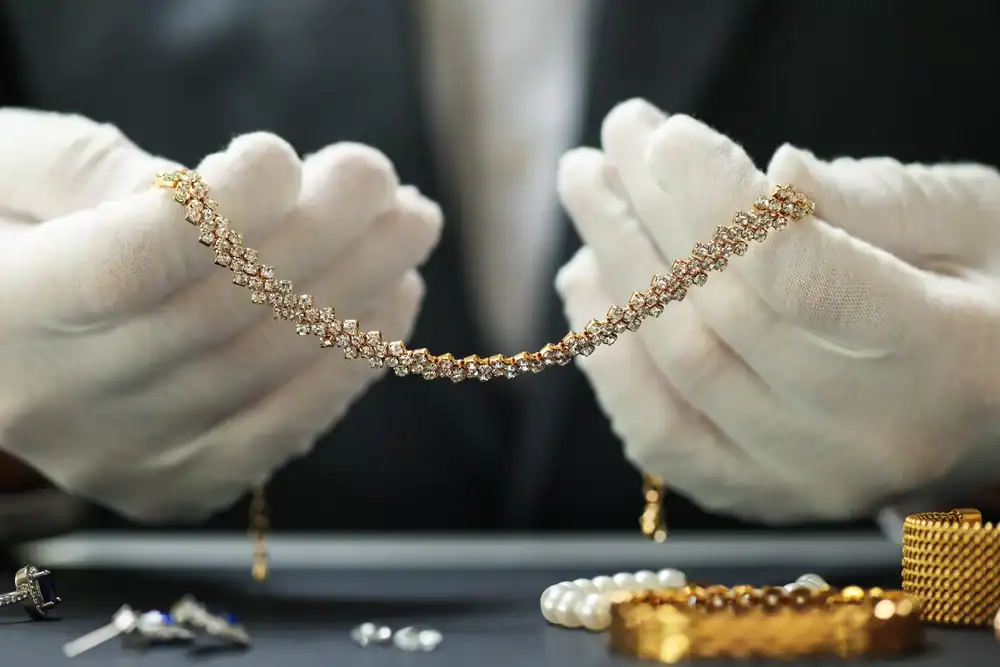
Jewelry is a different story. A 14K gold necklace has real gold value, but it also has craftsmanship, design, and condition factored into what a buyer will pay. When you’re selling to a dealer, you’re generally selling at melt value — meaning the price reflects the gold content, not what the piece cost at retail. That’s not a bad deal if you paid a fair price to begin with and understand the math going in. But it’s a meaningful distinction if you bought fine jewelry expecting to recover the full purchase price.
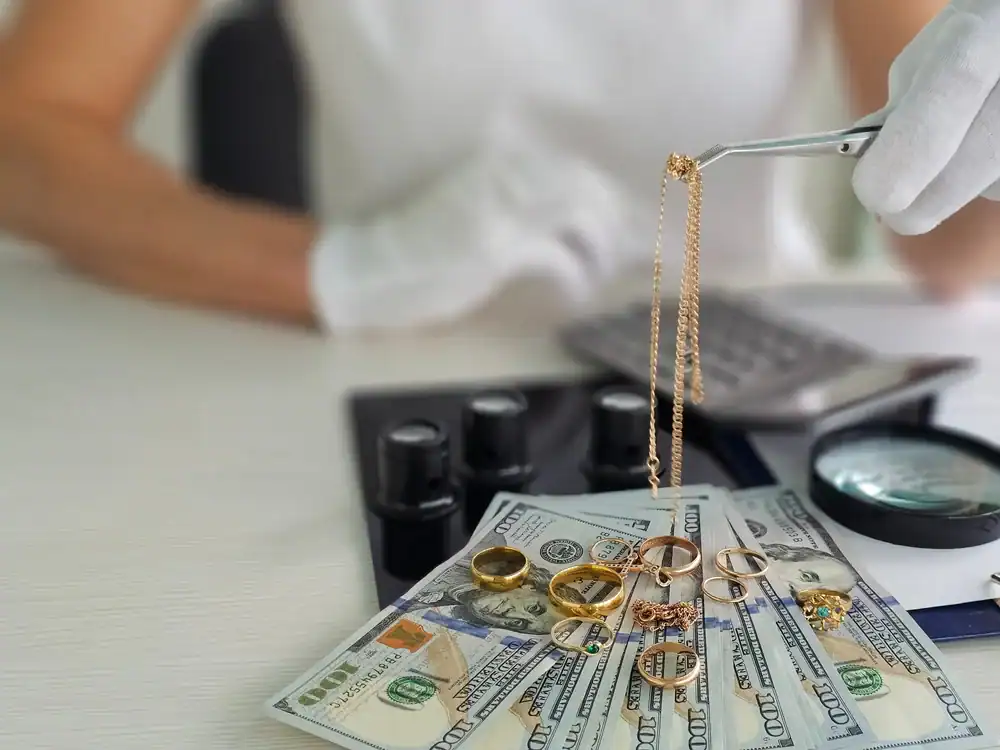
The important thing is transparency on both sides. A reputable dealer will test purity on the spot — using acid testing or an XRF analyzer — and explain exactly how they arrived at their offer based on current spot price, weight, and karat. If a dealer can’t or won’t walk you through that math, that’s a problem. Gold Coast Jewelry & Pawn do both sides of this transaction regularly — buying gold from Nassau and Suffolk County residents and selling investment-grade pieces — so the pricing process isn’t a mystery. We can show you what your gold is worth before you decide anything.
For Nassau County residents who’ve inherited jewelry from family estates — which is genuinely common given the county’s older homeowner population and the wealth that’s been accumulated here over decades — getting a professional assessment is often the first step that makes everything else clearer. You might be sitting on more value than you realize, or you might find that a piece you thought was solid gold is gold-filled or plated. Either way, knowing is better than guessing.
Dollar-Cost Averaging in Precious Metals: How Nassau County Investors Build Positions Over Time
With gold near all-time highs, one of the most common questions we hear is some version of: “Have I already missed it?” It’s a fair concern. Buying at the top of a price run feels risky, and nobody wants to be the person who bought the peak.
Dollar-cost averaging is the practical answer to that anxiety. Instead of committing a lump sum at whatever today’s price happens to be, you invest a fixed amount at regular intervals — monthly, quarterly, whatever fits your budget. When prices are higher, your fixed dollar amount buys fewer ounces. When prices dip, it buys more. Over time, your average cost per ounce smooths out, and you stop trying to predict the market.
This approach works particularly well for silver, where price swings tend to be sharper than gold’s. But it applies to gold too, especially for someone who’s new to precious metals and wants to build a position without the stress of timing every purchase. Most financial advisors suggest keeping precious metals at somewhere between 5% and 15% of a diversified portfolio — not a dominant position, but a meaningful one. Getting there gradually is a smarter approach than trying to do it all at once.
There’s also a psychological benefit that doesn’t get talked about enough. When you’re buying incrementally, a price drop isn’t a loss — it’s an opportunity to accumulate more at a lower cost. That reframe changes how you experience market volatility, and it’s one of the reasons experienced investors in precious metals tend to be calmer about short-term price movements than people who made a single large purchase at one moment in time.
For Nassau County residents who are already managing investment accounts, real estate, and retirement savings — which describes a lot of households between Syosset and Garden City — adding precious metals through a consistent, manageable accumulation strategy fits naturally alongside existing financial planning. It doesn’t require a dramatic shift in how you manage your money. It just requires a trusted local source for the actual metal, which is where the relationship with a dealer matters.
Where to Buy Gold in Nassau County, NY: What to Look for in a Local Dealer
The best gold investment is the one you actually understand — and that you can get in and out of without feeling like you got taken. Whether you’re looking at physical bullion, a few silver coins to start, or trying to figure out what inherited jewelry is actually worth, the process should feel straightforward, not intimidating.
What separates a good dealer from a bad one comes down to a few things: transparent pricing based on real spot prices and verified purity, no-pressure conversations where you can ask questions without feeling rushed, and a business that’s licensed, established, and accountable to someone other than themselves. The Long Island Press voted us the best pawn shop on Long Island because we do the work honestly.
If you’re in Nassau County and you want to talk through your options — whether that’s buying your first ounce of gold, understanding what your jewelry is worth, or just getting a straight answer about how this all works — we’re right up the Jericho Turnpike in Huntington. Come in, ask questions, and leave with a clearer picture. That’s always a good place to start.