
Summary:
Settling an estate is one of those things nobody prepares for until they’re in the middle of it. You’re dealing with grief, paperwork, family dynamics, and a house full of belongings — all at once. If jewelry, watches, or precious metals are part of the estate, there’s an added layer: legal requirements that vary by state and county, tax rules most people don’t know exist, and a real risk of making costly mistakes if you sell the wrong way or to the wrong buyer. This guide covers what Nassau County residents specifically need to know — from probate court requirements to tax treatment — so you can move forward with confidence.
Estate Liquidation Laws: What Nassau County Executors Need to Know
In New York, estates valued over $30,000 generally require probate before assets can be formally distributed or sold. That process runs through Nassau County’s Surrogate’s Court, located at 262 Old Country Road in Mineola. As executor, you’ll need to be appointed by the court and receive either Letters Testamentary (if there’s a will) or Letters of Administration (if there isn’t) before you have the legal authority to sell estate property on behalf of the estate.
The timeline matters here. Probate in Nassau County typically takes seven to nine months from start to finish, sometimes longer if the estate is contested or complex. During that window, creditors have a minimum of seven months to file claims against the estate — which means liquidating assets too early can create legal exposure. Knowing where you stand in the process before you sell anything is the first step.
Probate Jewelry Sales: What Documentation Do You Actually Need?
Once you have your Letters Testamentary or Letters of Administration in hand, you have the legal authority to sell personal property — including jewelry, watches, coins, and precious metals. But having that authority and having the right paperwork are two different things.
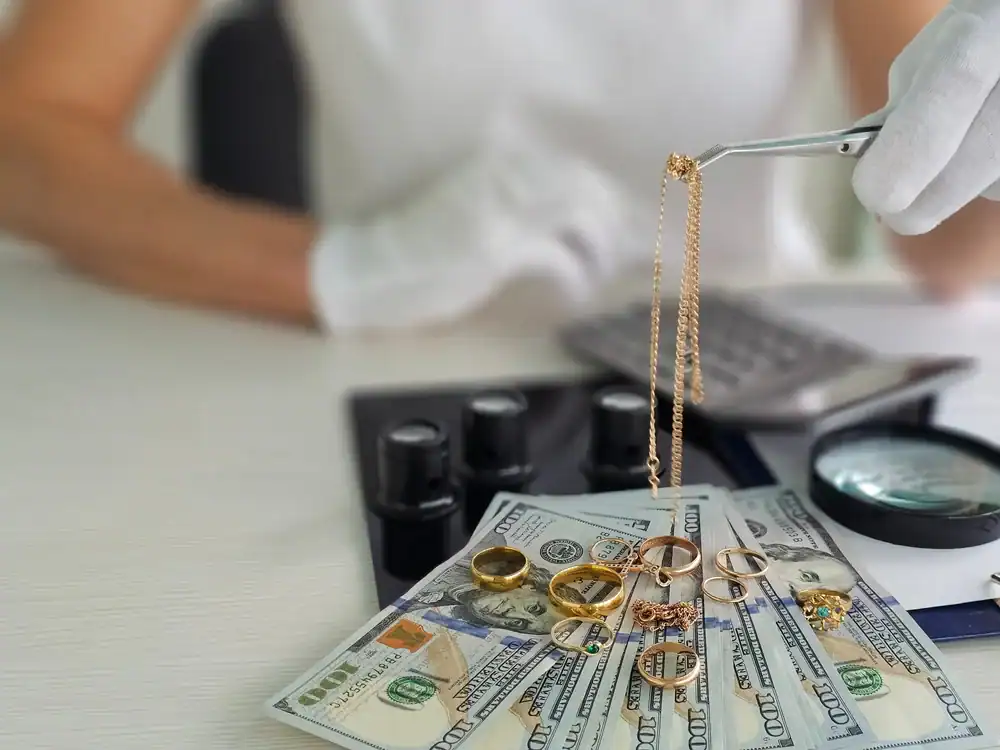
When selling estate jewelry to a licensed dealer in Nassau County, you should bring your court-issued letters, a valid government-issued photo ID, and any documentation that supports the identity or provenance of the items — original purchase receipts, prior appraisals, insurance records, or certificates of authenticity for branded pieces like a Rolex or a signed designer piece. A licensed dealer is legally required to record your identification and a description of the items purchased. That paper trail isn’t just a legal formality — it protects you.
For estate accounting purposes, you’ll want a written record of every transaction: what was sold, when, to whom, and for how much. This documentation feeds directly into the final estate accounting that gets filed with the Surrogate’s Court, and it’s what protects you if any heir later questions how the estate was handled. A licensed pawnbroker or precious metals dealer in New York is required by state law to maintain these records, which is one reason why selling to a licensed dealer often makes more sense than a private sale or an informal arrangement.
If the estate includes items the IRS would consider significant — generally personal property valued over $5,000 per item — you may also need a qualified appraisal conducted under USPAP (Uniform Standards of Professional Appraisal Practice) standards for the estate tax return. New York’s estate tax return is due nine months after the date of death, so the clock starts immediately.
Estate Jewelry Appraisal: How Valuation Works for Probate and Tax Purposes
There’s a distinction worth understanding here: a dealer’s offer and a formal appraisal are not the same thing, and knowing which one you need — and when — saves time and money.
A licensed dealer’s offer reflects current market value. It tells you what your item is worth to a buyer in today’s market, factoring in precious metal spot prices, brand, condition, and demand. That number is real and useful, but it’s not the same as a USPAP-compliant appraisal prepared by a certified appraiser for IRS or probate purposes. If the estate is subject to New York State estate tax — which applies to estates exceeding $6.58 million in 2025 — you’ll want a formal qualified appraisal on record before filing the estate tax return.
For most Nassau County families, the practical reality is this: New York does not have an inheritance tax. Heirs don’t owe state tax simply for receiving jewelry or other property. And the federal estate tax exemption sits at $13.8 million, meaning the vast majority of estates won’t trigger federal liability either. Where New York’s estate tax does apply, it’s the estate itself — not the individual heirs — that owes it.
There’s also a tax rule that surprises a lot of people: the stepped-up basis. When you inherit jewelry or other personal property, your cost basis for capital gains purposes is reset to the fair market value on the date of the original owner’s death. That means if you sell inherited jewelry shortly after receiving it, you may owe little to no capital gains tax on the transaction — because the “gain” from your perspective is minimal. It’s one of the more favorable tax treatments in the entire tax code, and it’s one most people don’t know about until someone explains it to them.
Inherited Jewelry in Nassau County: Choosing the Right Buyer
Nassau County estates are not like estates everywhere else. The North Shore communities — Great Neck, Manhasset, Roslyn, Old Westbury, Oyster Bay — have long been home to families with substantial collections of fine jewelry, luxury watches, and precious metals. Many of those pieces were purchased from Manhattan jewelers: Tiffany, Cartier, Harry Winston. Knowing what you have, and finding a buyer who actually understands its value, makes a real difference in what you walk away with.
The two most common options are estate sale companies and direct buyers. Estate sale companies organize and run public sales from the home, which can work well for furniture and household goods but often underperform for high-value jewelry — and they charge 25 to 40 percent commission on gross sales. Selling directly to a licensed dealer is faster, more private, and for jewelry specifically, often more profitable once you account for those fees.
What to Look for in a Licensed Estate Jewelry Buyer on Long Island
Not every buyer who advertises estate jewelry purchases is the same. In New York, licensed pawnbrokers and precious metals dealers operate under state and local regulations that require transaction record-keeping, mandatory holding periods before resale, and reporting obligations to law enforcement. That regulatory framework is actually a feature, not a burden — it means there’s accountability built into every transaction.
When you’re evaluating buyers, look for a few things. First, transparency: a reputable buyer should be able to explain how they arrived at their offer, whether that’s based on precious metal spot prices, brand premium, condition, or collector demand. A single number with no explanation is a red flag. Second, documentation: they should provide a written receipt itemizing what was sold and for what price. Third, expertise in the specific items you’re selling. A buyer who handles everything from electronics to furniture may not have the depth of knowledge to accurately value a Rolex Submariner or a diamond engagement ring from a major estate.
We’ve been serving Nassau and Suffolk County residents for years, and we’ve seen what happens when families rush this process — or go to the wrong buyer. Estate jewelry in particular requires someone who understands both intrinsic value (the metal, the stones) and market value (the brand, the era, the demand). Those two numbers can be very different. A vintage Rolex, for example, is worth far more than its gold content. A signed piece from a recognized designer commands a premium that a general buyer might miss entirely. Getting that right matters — both for the estate accounting and for the heirs who are counting on a fair outcome.
Nassau County's Public Administrator: What Happens When There's No Executor
Most people have never heard of the Nassau County Public Administrator, but it’s worth knowing the office exists — and what it means for estates that don’t have a qualified executor in place.
When someone dies in Nassau County without a will, or when the named executor is unable or unwilling to act, the Surrogate’s Court can appoint the Public Administrator to manage the estate. That office is legally required to liquidate all estate assets — including jewelry, vehicles, and real property — through public auction. The proceeds go toward paying estate debts, with any remainder distributed to heirs according to New York’s intestacy laws.
The public auction route is not ideal for anyone hoping to maximize the value of fine jewelry or luxury watches. Auction outcomes are unpredictable, buyers at public estate auctions are often dealers looking for deep discounts, and the process offers no privacy whatsoever. For families who do have an executor in place and the legal authority to act, working with a licensed private dealer is almost always the better path — faster, more controlled, and more likely to yield a fair return on high-value pieces.
This is also why it matters to move thoughtfully but not too slowly. Once the Public Administrator becomes involved, the family loses control of the process entirely. If you’re an executor with Letters Testamentary in hand and you’re ready to liquidate estate jewelry, the window to act on your own terms is open — but it doesn’t stay open indefinitely.
Selling Estate Jewelry in Nassau County: Where to Go From Here
The legal side of estate liquidation is manageable once you understand the framework. Get your court documents in order, know your timeline relative to the nine-month estate tax deadline, and work with a licensed buyer who can provide the documentation your estate accounting requires. The stepped-up basis rule means the tax picture is often better than people expect. And selling directly to a specialist — rather than through an estate sale or public auction — is usually faster, more private, and more financially sound for high-value jewelry.
If you’re working through an estate in Nassau County and have jewelry, watches, coins, or precious metals to sell, we’re here to help. We’re voted the Best Pawn Shop on Long Island by the Long Island Press, and we’ve built that reputation by being straightforward with people — especially in situations like this one, where getting a fair shake matters most.
We’re located at 1786 E. Jericho Turnpike in Huntington, right on the Nassau-Suffolk line. Reach out to us before you make any decisions — we’re happy to answer questions, explain how the process works, and give you a clear, honest picture of what your items are worth.